
.avif)


Recruitment leaders in retail have spent a lot of time, energy, and money digitizing their hiring processes.
Digital transformation was the hot topic for the past decade. And understandably so. The high candidate volumes and decentralized character of the retail TA setup put it in a category of its own in terms of operational complexity.
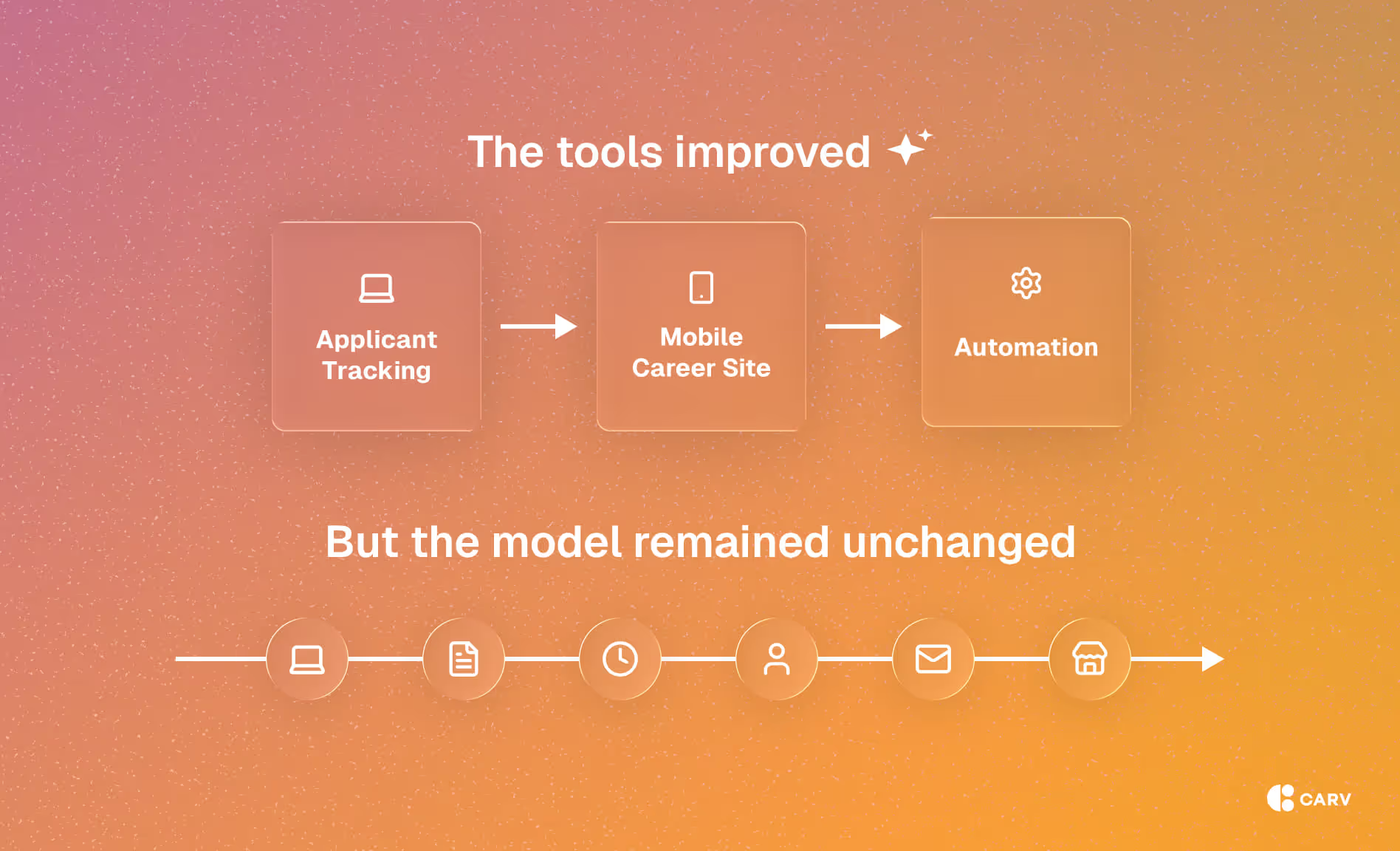
Through this transformation, applicant tracking systems (ATS) replaced spreadsheets, career sites became mobile-optimized, and rule-based automation was used to streamline parts of the workflow.
These investments have paid off, but lately, the gains have slowed. Despite all the technology, the same frustrations persist: Candidate experience is sub-optimal to say the least, location managers still drown in recruitment tasks, and peak seasons still expose cracks in the foundation.
More than once have we heard the retail recruitment process being called ‘a rejection machine’. Which is not the feeling you want candidates to have after engaging with your brand. After all, your candidates are more often than not also your customers.
This isn’t happening because of bad tools. It’s happening because the operating model hasn't evolved to match the complexity of modern retail recruitment and the expectations of the modern candidate. What worked in the past, when hiring was simpler and more linear, can’t keep pace with the modern reality.
After all, hundreds of stores operate as independent hiring funnels, candidates behave unpredictably, and frontline managers juggle recruitment alongside other tasks – like, you know, running their stores.
In short, digital transformation in retail volume hiring has reached its ceiling. " i.e., the point where adding more tools or fine-tuning existing processes delivers diminishing returns.
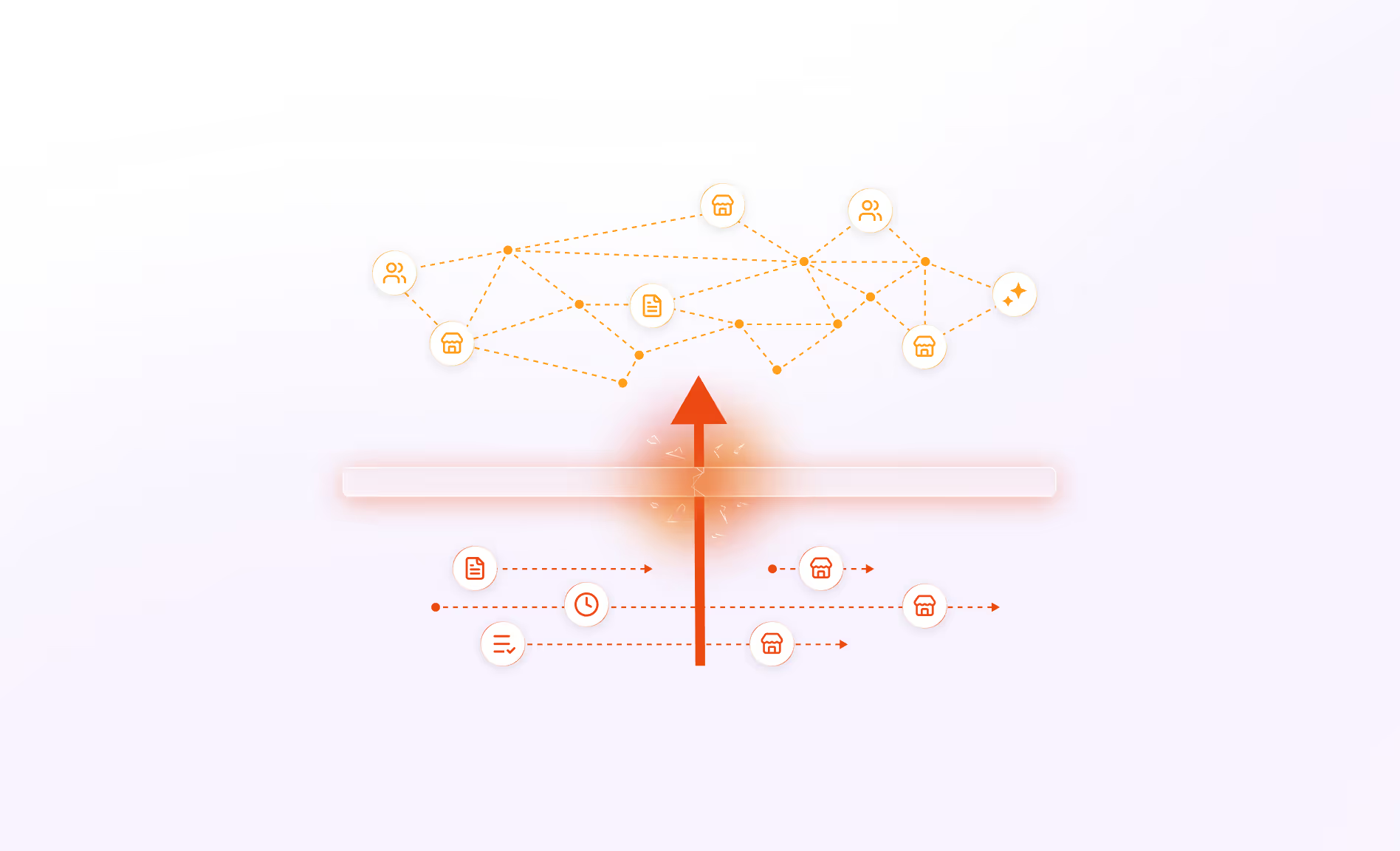
To break through this ceiling, you need a different approach. Not another optimization, but a fundamental shift in how hiring actually works, and AI allows for such a shift.
A familiar frustration in retail hiring
This is what we hear a lot from the companies we work with: The last high-season hiring push looked successful on paper. Applications poured in. Roles were technically filled. Stores stayed open and staffed through peak. But behind the metrics, it felt far from smooth.
Store managers were juggling applicant reviews between opening shifts, inventory checks, and customer issues. Candidates waited days (some even weeks) for responses and many of them quietly dropped out. Qualified applicants got buried in queues, while roles stayed open longer than planned.
What these peak periods really do is expose the cracks in the hiring process. The issue isn’t effort. Retail TA teams are among the hardest-working in any industry, often managing thousands of applications across hundreds of locations with limited centralized support. And it’s not intent – everyone knows hiring needs to move faster and feel better for candidates.
The real problem is that outcomes haven’t kept pace with investment. The process may be digitized, but progress still depends on human availability. In retail, that availability is scarce, especially when demand spikes.
The digital transformation paradox
In retail hiring, speed, consistency, and control remain elusive. The reason? Because digital transformation didn't change the way hiring actually works.
ATS platforms made tracking easier. Mobile career sites made applying faster. Automation streamlined screening and scheduling. These were meaningful improvements, and they helped retail businesses execute more efficiently. But the underlying model still relies on:
- Linear workflows that assume candidates move in predictable sequences
- Human-triggered handoffs that create delays when someone isn’t immediately available
- Fragile coordination across tools, roles, and locations that breaks down under pressure
This created a paradox that keeps retailers stuck in a (seemingly) endless cycle. The tools are better, but the operating model is the same, so improvements plateau.
Where the digital ceiling shows up
Understanding where retail hiring breaks down is the first step toward fixing it.
- Speed is still gated by human availability: Store managers must make hiring decisions while running stores. As such, applications often sit in queues during busy periods. By the time someone responds, candidates have moved on.
- Handoffs leak across inboxes, calendars, and systems: Even with an ATS in place, retail hiring requires constant coordination. Every handoff could lead to missed confirmations, wrong recipients, or communication breakdowns. These things result in poor candidate experiences, and retailers lose access to qualified applicants.
- Candidates behave non-linearly: Retail candidates don't move in a straight line. They apply at irregular times, often reschedule their in-store interviews, and drop off unexpectedly. Hiring models built on rigid workflows can't accommodate this reality.
- Multi-location execution makes consistency nearly impossible: Every store operates in a unique labor market with different candidate supply, wage pressure, and competition. Just as important, not every store manager excels at recruiting. These realities create an inconsistent candidate experience that can reflect poorly on a brand.
And because most candidates are also customers, every breakdown impacts the retail businesses as a whole. A rejected candidate might decide to boycott the store – especially if they felt ignored or disrespected in any way. Fortunately, AI-powered systems can help!
Why retail feels this pain more than anyone else
Retail is structurally different from other talent acquisition environments.
First, many retailers, from local grocery store chains to global behemoths like Walmart or Carrefour, have multiple locations, which means they could have many hiring funnels running in parallel. This is a real-world complexity that other business models don't have to deal with.
Second, store managers are key decision-makers, but not typical recruiters. Their judgment matters, but recruitment is only one of their responsibilities – and it's rarely the most urgent. So, when hiring competes with sales, inventory, and customer service KPIs, it often loses. This fact creates a bottleneck that no amount of training or process improvement can fully resolve.
And third, seasonality and local labor markets create constant volatility. Demand spikes during holidays and promotional events, then drops during slower months. Candidate supply fluctuates based on school schedules, second jobs, and local economic conditions.
While other industries, like healthcare, face similar pressures, few experience the combination of high turnover, distributed execution, and brand sensitivity that defines the retail industry.
To be clear, the current hiring system used by most retailers isn't broken. It's simply operating beyond what a process-driven model can handle because it was designed for a simpler time.
Why optimization won’t fix it
Further optimization won’t save retail hiring. Why? Because new templates, faster approvals, and tighter SLAs won’t fix the underlying issue: A model that doesn't suit retail staffing efforts.
The current model depends on perfect timing, constant human availability, and linear progression in a non-linear world. It assumes candidates wait patiently for responses, managers have time to review applications, and the process moves smoothly from one stage to the next.
None of these assumptions hold in practice, especially during high-volume periods. This is why incremental improvements feel less impactful. The inefficiency is in the steps themselves.
What’s required is a shift at the system level. Rather than making the existing model run faster, retail organizations need to redesign their hiring strategies for the modern world. In other words, you need to trade your process-driven model for an intelligence-driven model.
From process-driven to intelligence-driven hiring
The difference between process-driven and intelligence-driven hiring represents a fundamental shift in how work gets done, who does it, and what’s possible for retailers.
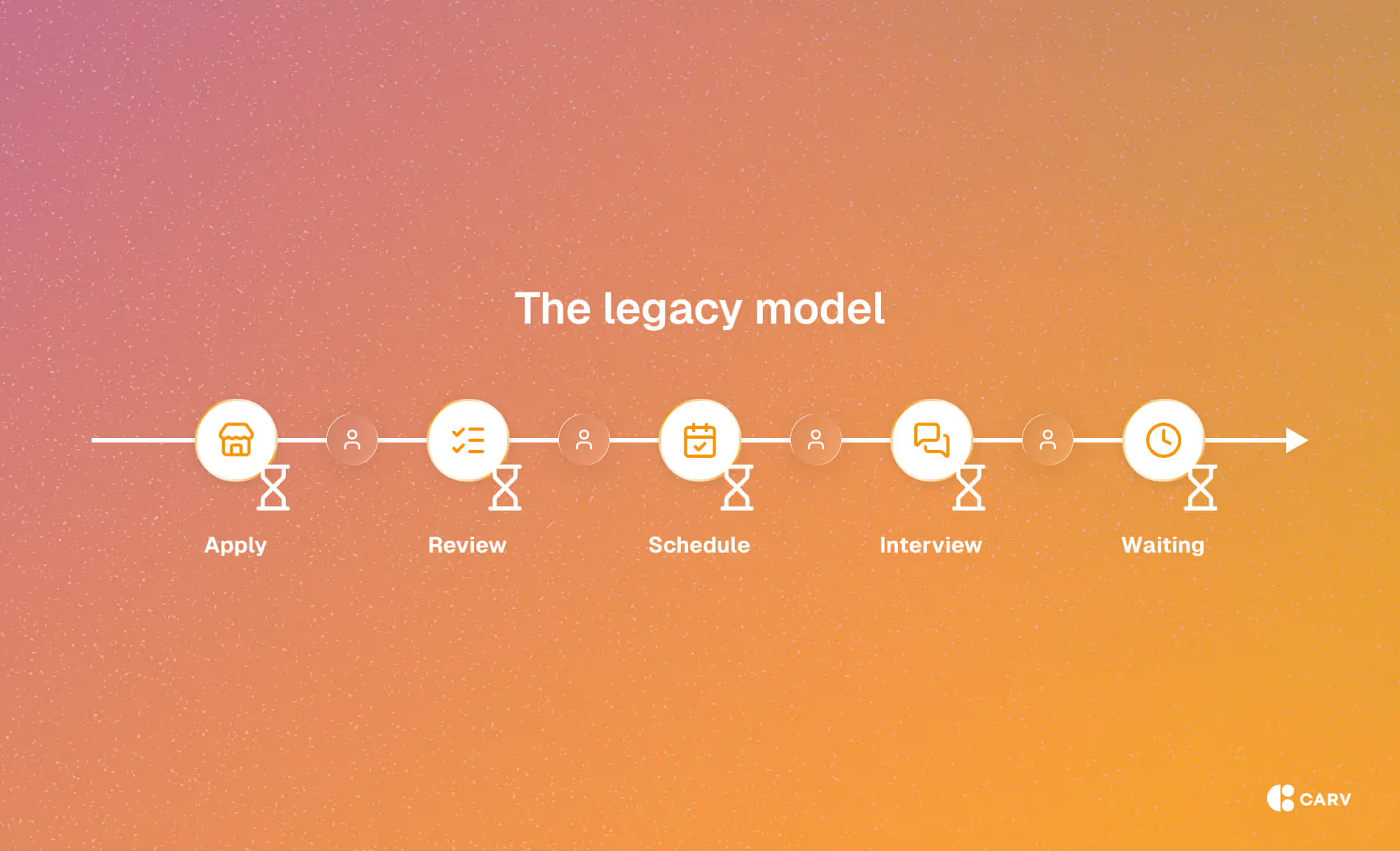
Process-driven hiring (The legacy model)
In a process-driven hiring model, hiring moves through linear stages with fixed workflows.
Progress only happens when someone, typically a store manager, has time to take the next action, e.g. review an application, schedule an interview, or send a follow-up.
To improve the process-driven hiring model, users must add additional rules, refine templates, and/or introduce new tools to make individual steps faster. But the system must still wait for humans at every handoff. When said humans aren’t available, the process stalls.
Intelligence-driven hiring (The next model)
In an intelligence-driven hiring model, the system maintains momentum automatically.
Context follows candidates across steps and locations, so every interaction is informed by what happened before. Just as important, actions trigger from signals, like when a candidate applies, reschedules, or goes silent, not from schedules or manual checklists.
Also worth mentioning, candidates move on their own timeline, and the system adapts in real time rather than forcing everyone into a rigid sequence. Plus, dashboards provide live visibility into the entire recruitment process, showing where candidates are, where bottlenecks exist, and how the talent pool is developing. The entire ecosystem operates as a connected intelligence layer instead of a collection of disconnected tools that slow the hiring process down.
This shift doesn’t eliminate human judgment. TA teams still design strategy, and store managers still make hiring decisions. But the repetitive, time-intensive work that used to consume most of their capacity gets handled automatically, allowing them to focus on higher-value tasks.
What AI transformation actually means in retail
AI transformation isn't about adding AI to your hiring process. It's about letting intelligence run the show. Many organizations get this wrong, so let's explore the distinction.
What does adding AI to your hiring process look like? Common examples include point solutions, such as deploying a chatbot on your career site or using an AI tool to screen resumes. They might deliver marginal improvements, but they don't change the way the system operates.
Letting intelligence run hiring means embedding agentic capabilities inside the workflows themselves so the system can execute tasks autonomously, respond to changes in real time, and maintain momentum without constant human intervention. Digging deeper:
- Intelligence embedded inside workflows. AI operates as part of the hiring process. When a candidate applies, the system engages them immediately. When they ask a question, it responds. When they're ready to schedule, it coordinates. This happens automatically, continuously, without anyone having to trigger a workflow manually.
- Always-on engagement, qualification, scheduling, and follow-up. The system works 24/7, across all locations, handling the high-volume, low-complexity tasks that used to consume most of the TA team's time. Candidates get immediate responses, clear next steps, and consistent communication throughout the hiring process.
- Central governance with local execution. Intelligence-driven hiring maintains consistent standards across locations while respecting local context. The system applies the same qualification criteria, communication tone, and brand standards everywhere, but adapts to local labor markets, as well as store- and candidate-specific needs.
The practical part
AI transformation starts with clarity. Before evaluating platforms or running pilots, you need to understand where your hiring process breaks and what success looks like.
Start by mapping the real hiring journey. Not the version documented in your process guides, but how hiring actually happens day-to-day across your locations.
Where do applications go after submission? Who's responsible for what? How long does each step take? Where do delays consistently occur? Your answers will reveal the gap between the intended process and reality – and that gap is where transformation opportunities live.
Next, identify where momentum dies. In retail hiring, there are predictable breakpoints:
- Response. How long does it take to contact candidates after they apply? If the answer is "it depends" or "whenever the manager has time," you've found a breakpoint. Candidates expect immediate acknowledgment, which AI systems can deliver.
- Screening. Who conducts the initial screening, and how long does it take? Bottlenecks develop when store managers are responsible for reviewing every application. Fortunately, AI can handle basic qualification tasks instantly and consistently.
- Scheduling. How many back-and-forth messages does it take to book an interview? AI platforms can handle scheduling autonomously, which will allow candidates to book interview slots that work for them while respecting manager availability.
- Follow-up. What happens after an interview? Follow-up is the point where many retail hiring processes break down. A lack of communication encourages candidates to seek other opportunities. AI will ensure every candidate knows where they stand.
Your job is to introduce intelligence at the breakpoints in your process.
Start where the pain is greatest, and the impact will be most visible. Then, measure the results to improve your time-to-hire metrics, candidate feedback responses, and turnover rates. Once you do, expand to additional breakpoints in your process.
The bottom line for hiring in the retail sector
Retail hiring hit the digital ceiling. Now it's time to evolve.
With an intelligent hiring process, your retail organization can operate at the scale and speed the industry demands for the first time – without adding headcount or overwhelming store managers. Say goodbye to manager bottlenecks and poor candidate experiences!
Agentic AI redesigns how hiring works. As such, it maintains momentum automatically, adapts to candidate behavior, and removes the structural constraints that limited retail recruitment.
Ready to see what intelligence-driven hiring looks like in practice? Watch this webinar with Carrefour to see how one of the world's largest retailers transformed its hiring process.