


.avif)


There's a quiet confusion sitting underneath most AI conversations in recruitment, and it's costing organizations more than they realize.
AI-enablement and AI-transformation get used as if they're the same thing, separated only by ambition. They aren't. They produce different outcomes, require different levels of commitment, and one of them is far more common than the other.
As "what should we do with AI?" becomes a more pressing question with every passing month, this piece lays out what AI transformation actually is and how to get it right.
Let's align on terms first
AI-enablement is giving your existing process access to AI. A recruiter still owns every step, but now has a smarter tool at each one: an AI chatbot that answers candidate questions, a screening agent that ranks candidates faster, a scheduling assistant that removes a few emails.
Every one of these is a genuine improvement, but each is capped by everything around it that didn't change.
A chatbot that answers candidate questions instantly doesn't fix a process where the next step - an interview, an offer, feedback - still depends on a person remembering to trigger it.
Stack enough of these tools together and what you get is the same operating model, running marginally faster at each individual step while the bottlenecks between those steps stay untouched.
AI transformation is a different kind of change altogether. It means rethinking the operating model itself, with AI at its core rather than layered on top. This brings a fundamental shift in how work flows, who or what makes each decision, how teams are structured and measured, and how data moves between systems.
That shift doesn't happen on its own. It also requires the change management to actually install the redesigned model, and the technology capable of running it once it's in place.
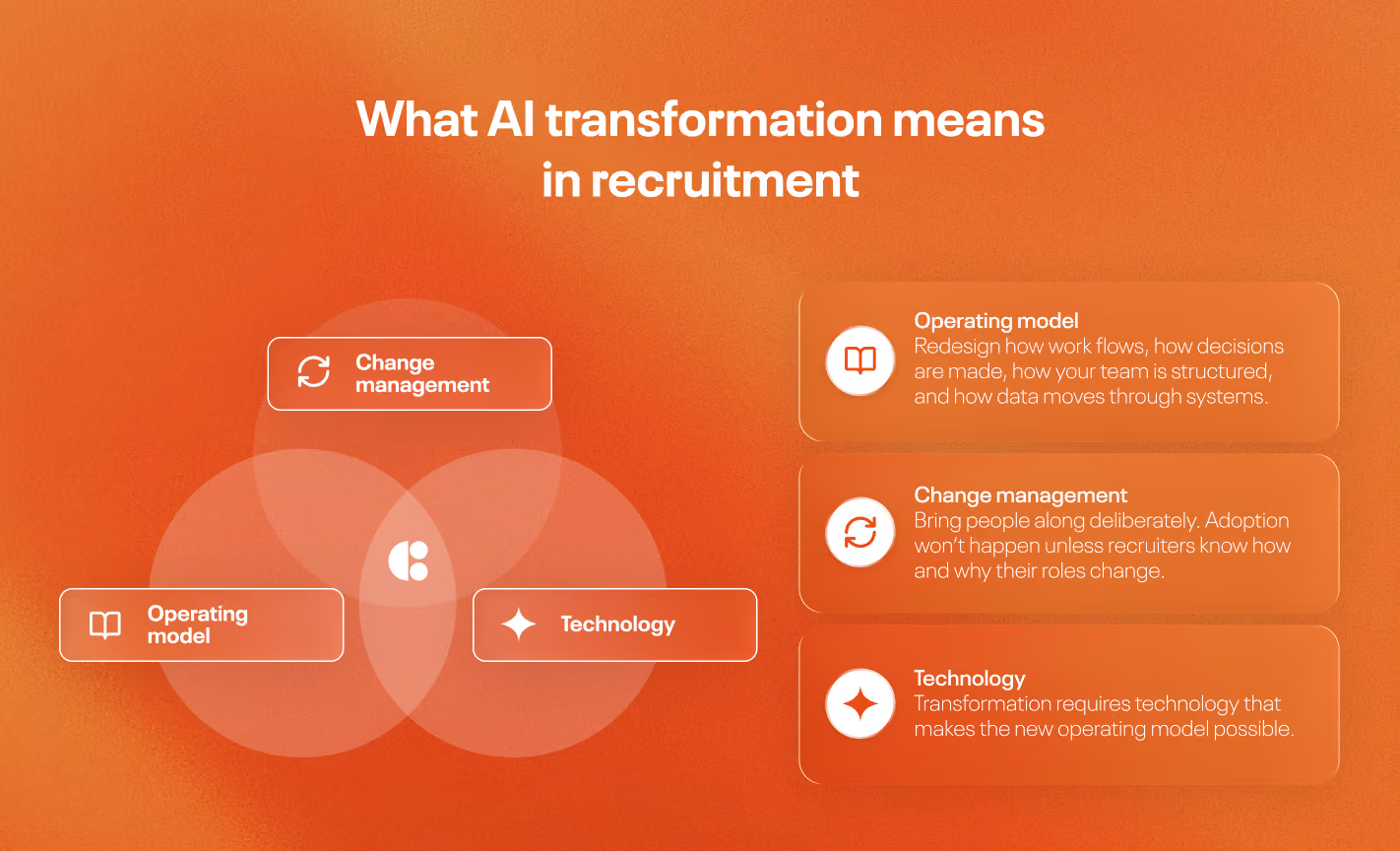
Real transformation, therefore, rests on three things:
- A new operating model,
- The change management required to install it,
- And the technology to run it.
Most organizations only ever bring one of the three to the table, usually the technology, which is exactly backwards. The model is the largest and most complex of the three, so it's worth starting there before turning to the other two.
The operating model: four pillars that move together
Recruiting work depends on people to keep it moving. A recruiter has to finish a call, log it, decide which candidates move forward, and reach out. Every step needs a human’s time and attention.
This dependency caps the capacity of recruitment teams to scale, and is exactly what AI transformation can help with. In an AI-transformed function, work gets redistributed between humans and technology - AI agents in our case, removing the capacity constraint.
An AI agent is software built to complete a specific task from start to finish, on its own, instead of requiring a person’s input at each step. It operates with the same context recruiters do, and follows the same guidelines.
By handing over tasks to AI agents, the team’s bandwidth is no longer capped at whatever recruiters can personally handle, and this eventually shows up as faster time-to-fill, more placements, and revenue growth the old model couldn't reach.
This redistribution of work between recruiters and AI is what defines a redesigned recruitment operating model, and it changes four things at once: workflows, how decisions are made, team structure, and data governance.
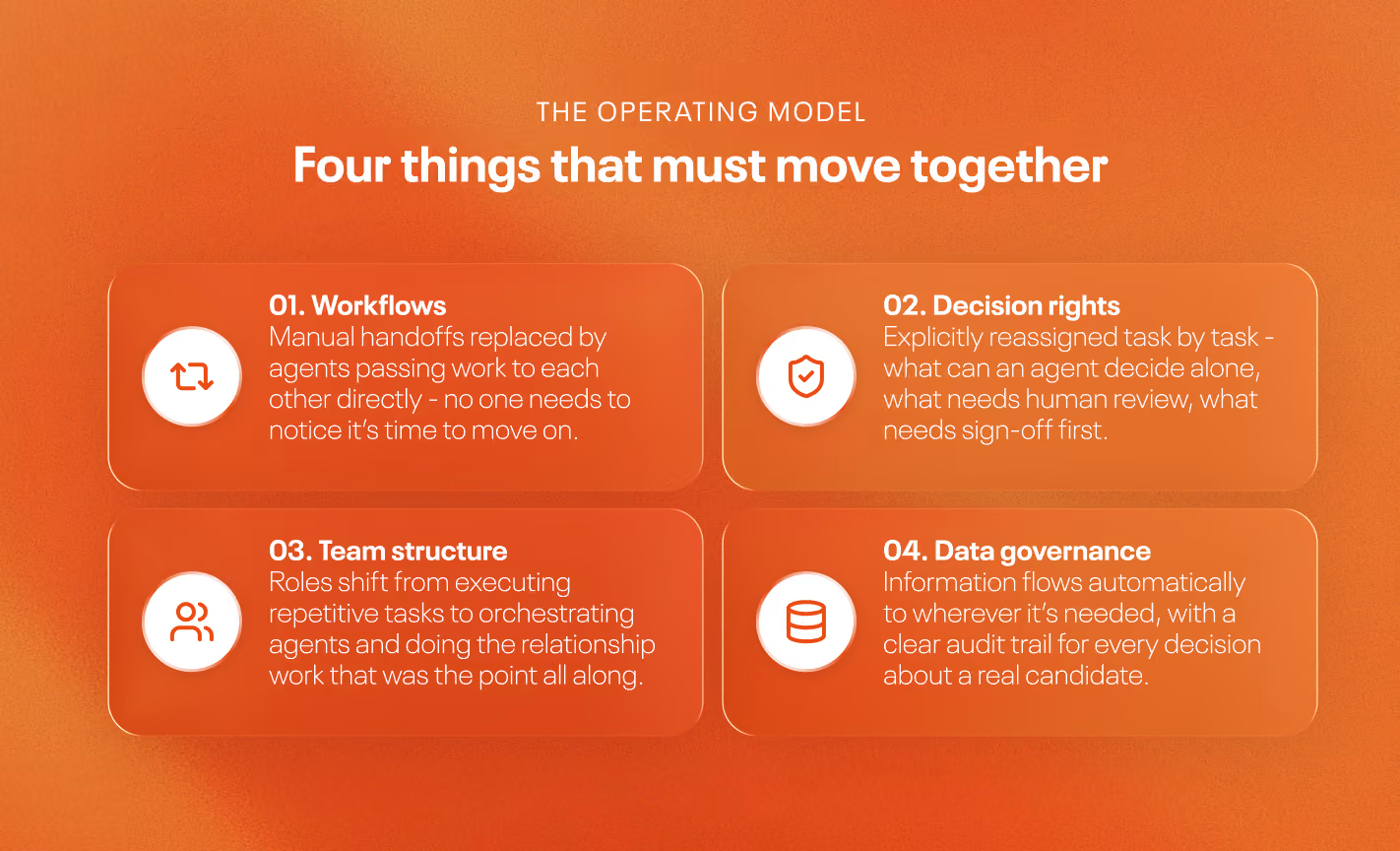
In practice:
- Workflows shift from a chain of manual handoffs to a system that runs on its own. Instead of a recruiter finishing one step and remembering to trigger the next, AI agents pass work to each other directly, from sourcing to engagement to screening, without anyone needing to notice it's time to move on.
- Decision rights get reassigned explicitly, task by task, instead of left to drift. Which decisions can an agent make outright? Which does it make with a human reviewing after the fact? Which needs a person before anything happens? This is where most organizations flinch, because writing it down means admitting some decisions a person has always owned don't need to be theirs anymore.
- Team structure follows from that, not the other way around. Once agents own certain decisions outright, roles built around executing repetitive tasks shift toward orchestrating agents, handling exceptions, and doing the relationship-driven work that was the actual point of the job all along. This is a genuine restructuring, not a new tool handed to an old role.
- Governance and data have to move too. Information needs to flow automatically to wherever it's needed, with a clear audit trail for anything that influenced a decision about a real candidate, because this is also where compliance obligations get satisfied or missed.
None of these four move independently. Reassign a decision without restructuring the role around it, and someone ends up doing oversight work while still measured like they're doing execution work. Redesign the workflow without governance, and you get speed with no audit trail behind it.
All four have to move in the same direction, deliberately and at the same time, or the redesign stalls halfway through.
Change management: the ingredient that makes the model real
A redesigned model on paper changes nothing on its own. It only becomes real once recruiters actually work differently day to day, and that shift doesn't happen just because new agents got deployed.
Recruiters who've built a career around owning every step of a process need a real reason to hand parts of it to an agent, and reassurance that doing so doesn't make them less essential.
That means training people not just on how to use new tools, but on what their role actually becomes once agents absorb the repetitive work, positioning them above the process instead of inside every step of it.
It therefore requires being honest about which roles change, which tasks disappear, and which skills matter more than they used to, going forward. It also requires staying involved after the initial rollout, because adoption doesn’t finish at launch.
This is where most attempts at transformation fail.
A recruiter handed a redesigned workflow with no explanation of why their role changed, or no support adjusting to it, will find ways to work around it rather than through it, and the old operating model quietly survives underneath the new technology.
Technology: the enabler that has to be built right
None of this happens without technology, and it doesn't happen with generic AI tools either.
Agents need to be built as actual recruitment agents, not generic AI wrapped around a recruiting use case.
That means giving them access to the same context a recruiter would need to make a good decision: the ATS, the CRM, past candidate history, notes from a call, and what a hiring manager actually wants versus what the job description says.
Without that access, an agent is guessing. With it, an agent can act with the same information a good recruiter would have used.
That access has to be built into the infrastructure itself, not added on top of it. Agents need to sit inside the systems recruiters already use, not as a separate tool someone has to remember to check.
This means that integrations need to run deep enough that an agent can read a candidate's full history before reaching out, not just the fields a recruiter had time to fill in the ATS.
And agents need to be built to work with each other, an intake agent handing context to a sourcing agent, a sourcing agent handing a shortlist to an engagement agent, rather than existing as disconnected point solutions that each solve one narrow problem and stop.
This means the agentic layer needs an orchestration engine on top of it, coordinating the agents the same way a recruiter would coordinate a team.
Get the technology wrong, and even a well-designed model has nothing to run on. Get it right, and recruiters stop operating the agents like tools and start working alongside them like teammates: an agent keeps the context from a call, acts on it, and passes it to the next agent or person without anyone repeating themselves.
If you're already on the enablement path
Many companies today are already firmly on the enablement path. They're using AI tools in specific process steps, seeing moderate gains, and starting to wonder if that's all AI can actually deliver.
If this sounds familiar, all is not lost. It is possible to redesign from here.
The first order of business is to stop bolting on new AI enabled point solutions. Every additional tool added on top of an unchanged operating model makes the eventual redesign harder.
Next up is to go back to the drawing board; after all, the operating model has to come first: rethinking how work actually flows, and what roles humans versus agents need to have across your recruiting operations.
From there, the people doing the work need to be brought along deliberately. Only once both of those are in place does it make sense to start building the technology to run it.
Remember, real transformation needs all three. So if you're standing at this point right now, unsure what to do next, we're happy to help you figure out what that looks like for your organization, from process to team structure to technology.

.avif)
