.avif)

.avif)


Most recruiting organizations are investing in AI. Few are seeing it change the outcomes that matter. This gap between adoption and impact is mainly a system design problem.
A company automates a task or process step without rethinking the process as a whole, so that specific step gets a bit faster, but the bottlenecks around it don’t disappear. As a result, the impact to the bottom line is insignificant.
I think that gap is about to close, because the market is moving from what I'd call a run book - a system that runs tasks based on instructions, to a mission book - a system you hand an outcome to and let it work out the instructions on its own.
I’ll explain what outcome-led looks like in practice, how we got here, and why building this type of system takes more than technology.
What we've been selling, and why it's already not enough
For the past few years, the entire AI recruiting category, Carv included, has largely sold the same promise: give an agent an instruction, and it will execute that instruction faster and more consistently than a person would.
Screen a candidate, schedule the interview, update the record. Each of those agents can be genuinely capable on its own, and some can even hand off to the next agent automatically once a condition is met.
At one req, or ten, this is completely manageable. A recruiter can hold the whole picture in their head: this one needs sourcing first, that one's ready for screening, this one's pipeline is too thin for scheduling yet. The coordination is real but it's light enough that a person carries it without thinking of it as a separate job.
That stops being true well before you'd expect. Somewhere between ten reqs and a few dozen, the coordination itself becomes the job, more than anyone can hold in their head at once.
At that point the choice isn't between a run book and a mission book anymore; it's between a mission book and a person drowning in exception handling, because the agents didn't stop working, the human orchestrating them just ran out of capacity to orchestrate.
That's why the current systems, even those offering end-to-end automation, won't be enough for much longer.
What outcome-led actually means
Picture this. A client tells you: we need twelve people in this region, for this role, by this date. That's it. That's the entire brief.
The system determines what needs to happen to hit that outcome. It deploys sourcing agents who source against the actual talent pool available in that region. It then engages screening agents who assess against what the role genuinely requires. And it brings in scheduling agents to involve the humans who need to be involved, and only where they need to be involved.
And if the plan isn't working, if the pipeline is thin or the timeline is slipping, it tells you that too, with enough context that a leader, or another agent, can actually act on it.
That is a categorically different relationship with technology than "here's a task, execute it." It's closer to how you'd brief an internal hire than how you'd configure a piece of software. Give a recruiter a goal and the context around it, and they figure out the how.
That's the bar a system has to clear to actually earn the word "transformation", and it’s what a mission book aims to do. Run-book systems won't reach it, because they’re intrinsically bound to the instructions a person gives them. However well orchestrated, they can only do what they were told to do.
Now, what does one gain from a mission book?
For a staffing firm, it means pricing an account based on what the system can handle, not on how many people you'd need to hire to cover the volume. That's a better margin on every account, and it lets you bid lower and still make money, which wins you more deals too.
For an in-house team, it means hitting a higher hiring target without adding coordinators every time that target goes up. The team stays the same size while the volume grows.
Before we look at what it takes to get there, here’s how the category became ready to build such mission systems.
How we got here
The shift didn't happen in one leap. It came in four distinct stages, each one making the next possible.
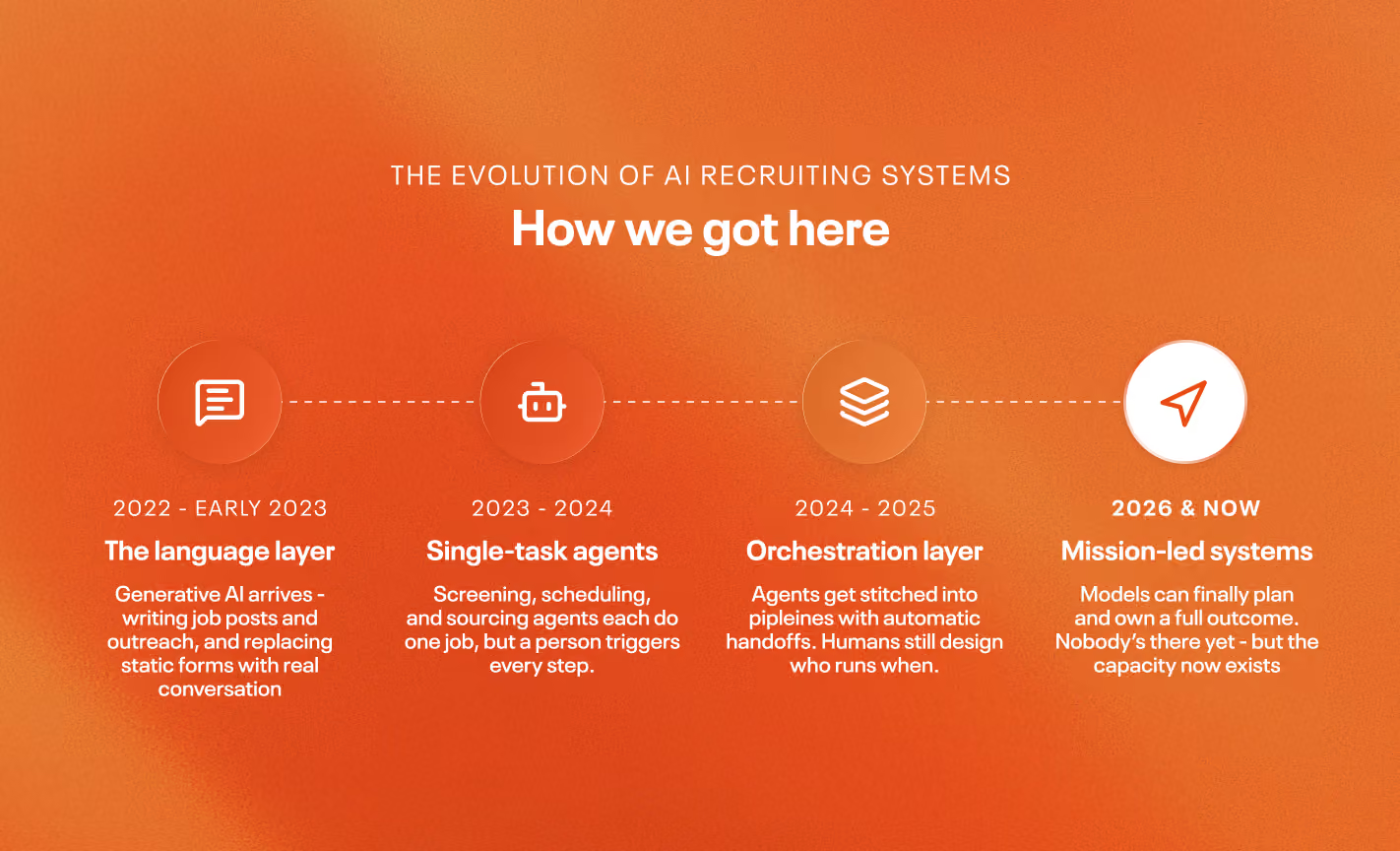
2022 to early 2023: generative AI arrives, and recruiting gets a language layer. The first wave of AI recruiting tech was mostly about text: writing job descriptions and candidate outreach emails, or holding basic conversations with a candidate via chatbots instead of a static form.
2023 to 2024: single-task agents show up. This is the phase most of the industry has been living in. Screening agents that can assess a resume against a job spec. Scheduling agents that can coordinate interview times across calendars. Sourcing copilots that can find candidates matching a profile. Each of these agents did their job well, and each still needed a person to trigger it, hand it an instruction, and decide what happened with the output.
2024 to 2026: orchestration becomes the gold standard. As these single agents matured, vendors started stitching them together into pipelines, and this is where the best operators sit today. The screening agent hands off to the scheduling agent automatically. A stalled pipeline can trigger a re-sourcing agent without anyone noticing the gap first.
The more advanced version of this doesn't just chain tasks together. It splits a single task into a team of specialists first. A deep technical screen isn't one agent doing everything, but a team of agents working the same conversation together, and only once they've reached a conclusion does the result move to the next stage in the pipeline.
The gains are genuine: faster handoffs, fewer dropped candidates, less manual re-entry between systems. What hasn't changed, at either level, is who's designing the system. The human is still the one deciding which agent runs when, in what order, what happens if a step fails, and how each specialist team is composed.
2026 and now: the models finally catch up to the ambition. The models underneath these systems have only recently become capable enough at planning and reasoning to own a full outcome.
This capability is starting to get built into real systems now, ours included, and it's early. Nobody has a mature, generally available mission-led system yet. But for the first time, the raw capability to build one actually exists, which is a different starting point than the industry had even a year ago.
Why this is where the market goes, and what it actually takes to get there
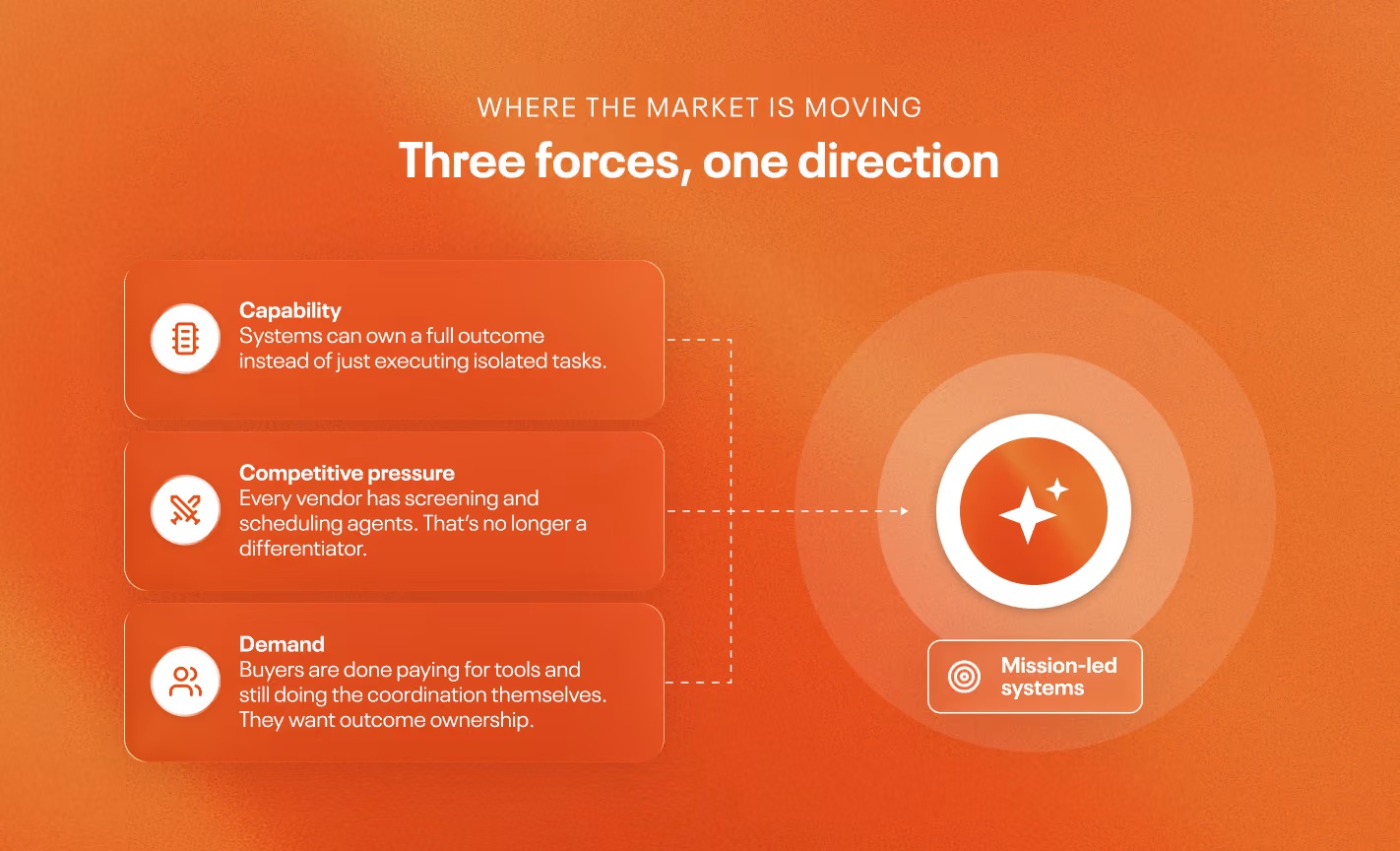
Three things are pulling the market in this direction, and only one of them is about technology.
The first is capability, and the timeline above already covers that.
The second is competitive pressure: every serious vendor now has a screening agent and a scheduling agent, so that's no longer a reason to pick one over another, it's the baseline. The real differentiator is whether a system can own an outcome instead of executing a task inside a process you still have to design yourself.
This isn't just a recruiting-specific shift. McKinsey describes the same move happening across industries, from point solutions, where AI makes a single task faster, to reimagining a whole workflow end to end.
The third force and the one that actually matters the most is demand.
Buyers are done paying for tools and still doing the coordination themselves. A TA leader who's bought five point solutions and still needs a person tracking every pipeline, chasing every stalled req, and deciding which agent handles what next hasn't bought less work, they've bought more systems to manage on top of the same job.
That frustration is what's pushing buyers to ask vendors for outcome ownership instead of more tooling, and it's a large part of why this shift isn't optional for vendors, even the ones who'd rather keep selling point solutions.
Now, knowing the market is headed there doesn't tell you what it actually takes to get there, and that's a different question.
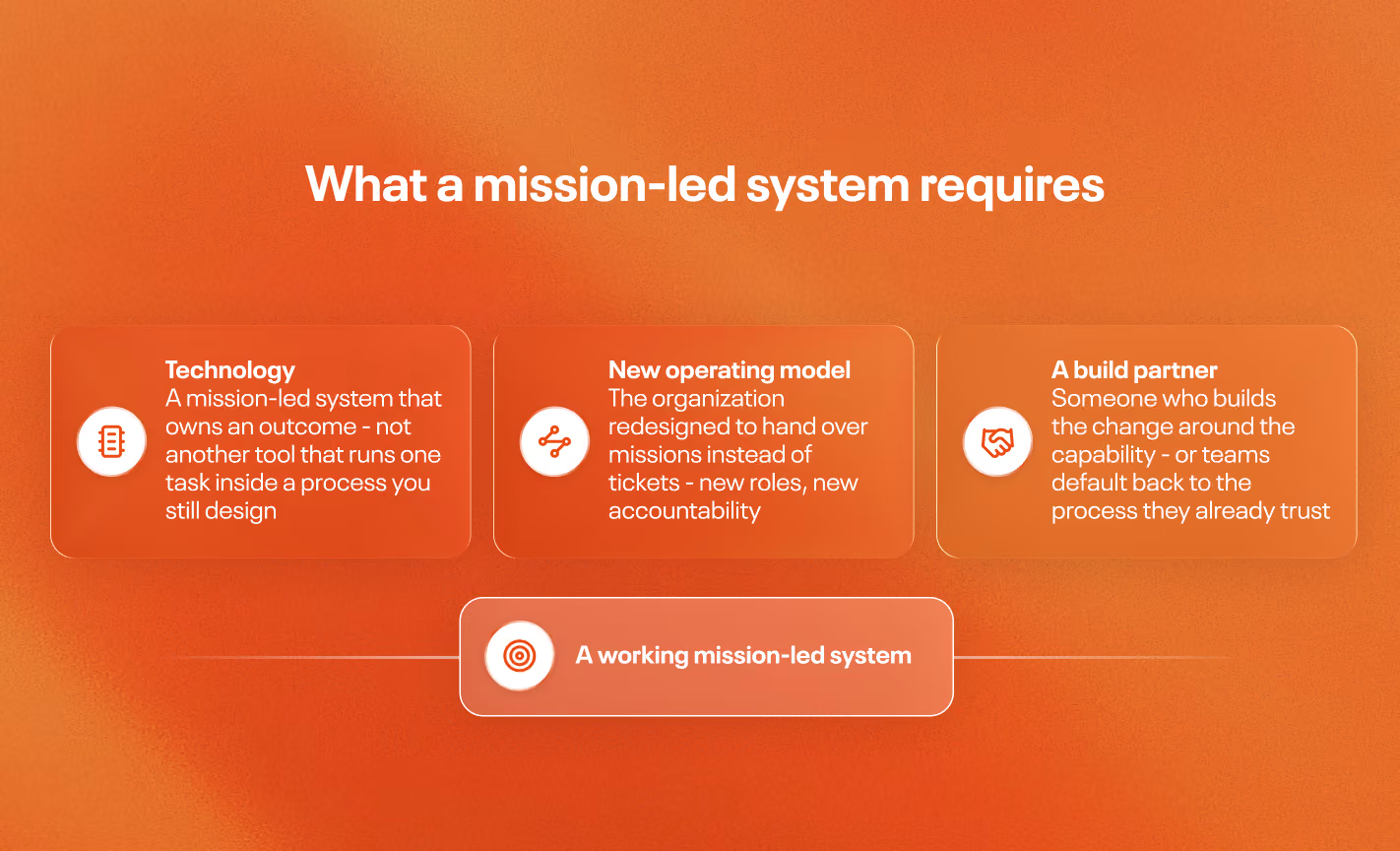
The technology is arriving faster than most organizations can absorb what it demands: a change to how work is structured and who's accountable for what. Most TA leaders know this. Ask them directly and the majority will tell you their workflows and roles have to change before an AI investment actually pays off.
Which is why this transformation takes more than technology. To be ready for mission-led systems, the organization needs to redesign itself around the new system. Its operating model needs to change, as a mission book only works inside an organization set up to hand over missions rather than tickets.
Finally, you also need a partner who knows how to build that change, because a team handed new capability with nothing built around it to receive it will just default back to the process it already trusts.
Most of what's sold in this category right now is only one of the three. Better agents, marketed as transformation. A change program with no technology underneath it. Or a consulting engagement that maps your process beautifully and shows you what the new operating model should look like, with no one capable of actually implementing it.
Each one looks like progress on its own. None of them gets you to a mission book, though, because no single piece is enough by itself.
Where this leaves us
Most recruiting organizations are investing in AI and still not seeing it move the outcomes that matter. Closing that gap takes three things at once, not one: a platform capable of owning a mission instead of isolated tasks, a team that knows how to work that way, and a partner who stays through the change to get you there.
We're building the technology piece as we speak. It's not a finished product yet, but we’d rather be the ones creating the future than waiting on the sidelines for it to be done.
We've done this before. Prior to Carv, we built and sold another recruitment technology company, one for the digital transformation era. That meant living through this exact process with clients: the technology, the operating model redesign, and the change management, all at once.
The AI era is a new chapter, and a genuinely exciting one. We're happy to take you on this journey with us, and help you rethink your operating model around it, the same way we helped past clients rethink theirs the last time the ground shifted this much.
What I'd ask a leader reading this to do is start from where the technology is today, with a partner committed to building toward the next wave alongside you, and use that time to get the team ready for how the work will change. The ones who wait will be starting from zero on all three at once, and by then, it might already be too late to catch up.