
AI Transformation in Staffing
Get resources, playbooks, and real-world insights from
forward-thinking staffing leaders directly in your inbox.
forward-thinking staffing leaders directly in your inbox.

Webinar
●
April 16, 2026
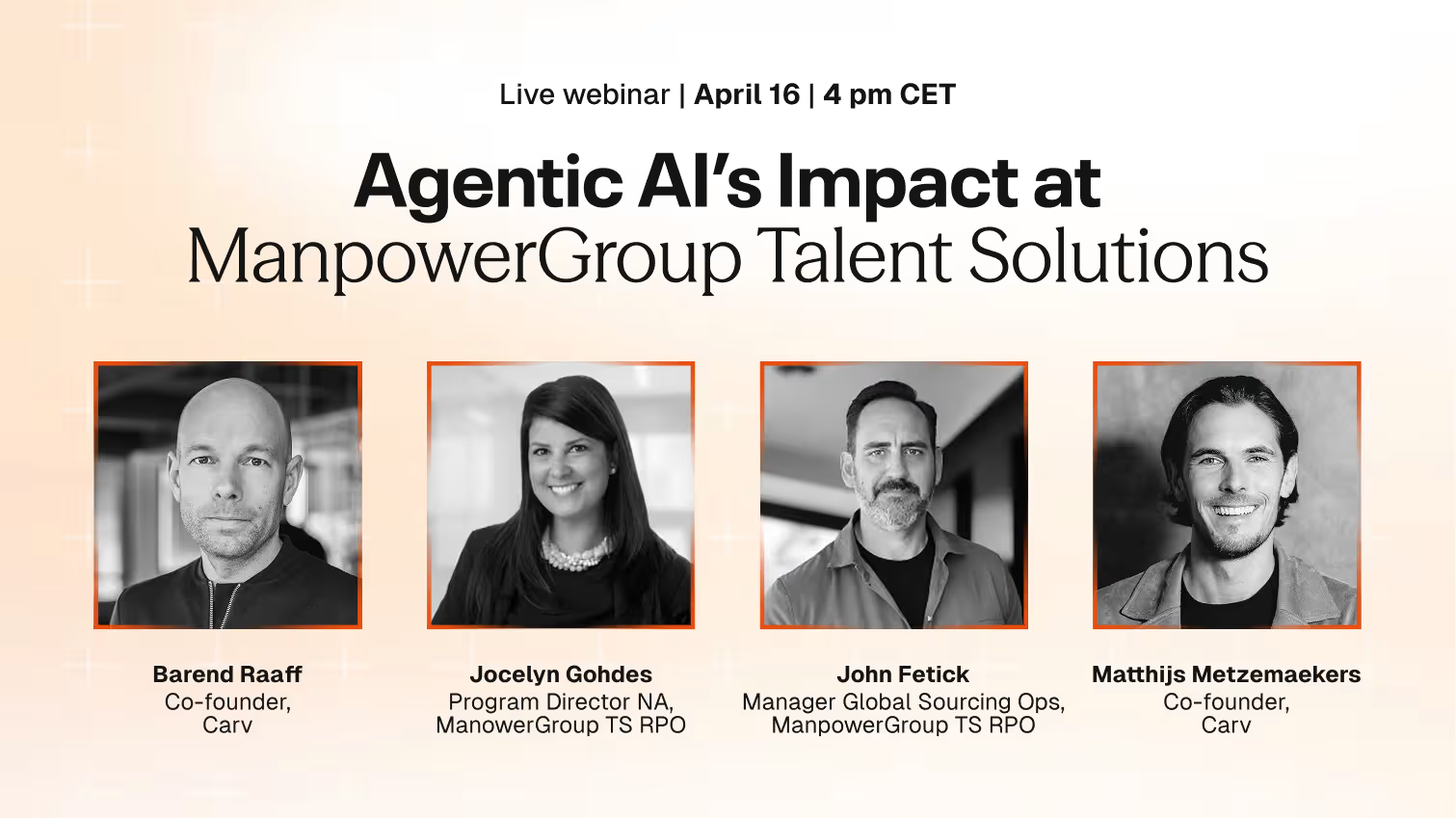
From Hiring Velocity to Business Outcomes: Agentic AI’s Impact at ManpowerGroup Talent Solutions
We'll explore how ManpowerGroup Talent Solutions reshaped its operating model to embed AI across core hiring processes and the impact this transformation has delivered.
AI transformation
Playbook
●
November 5, 2025
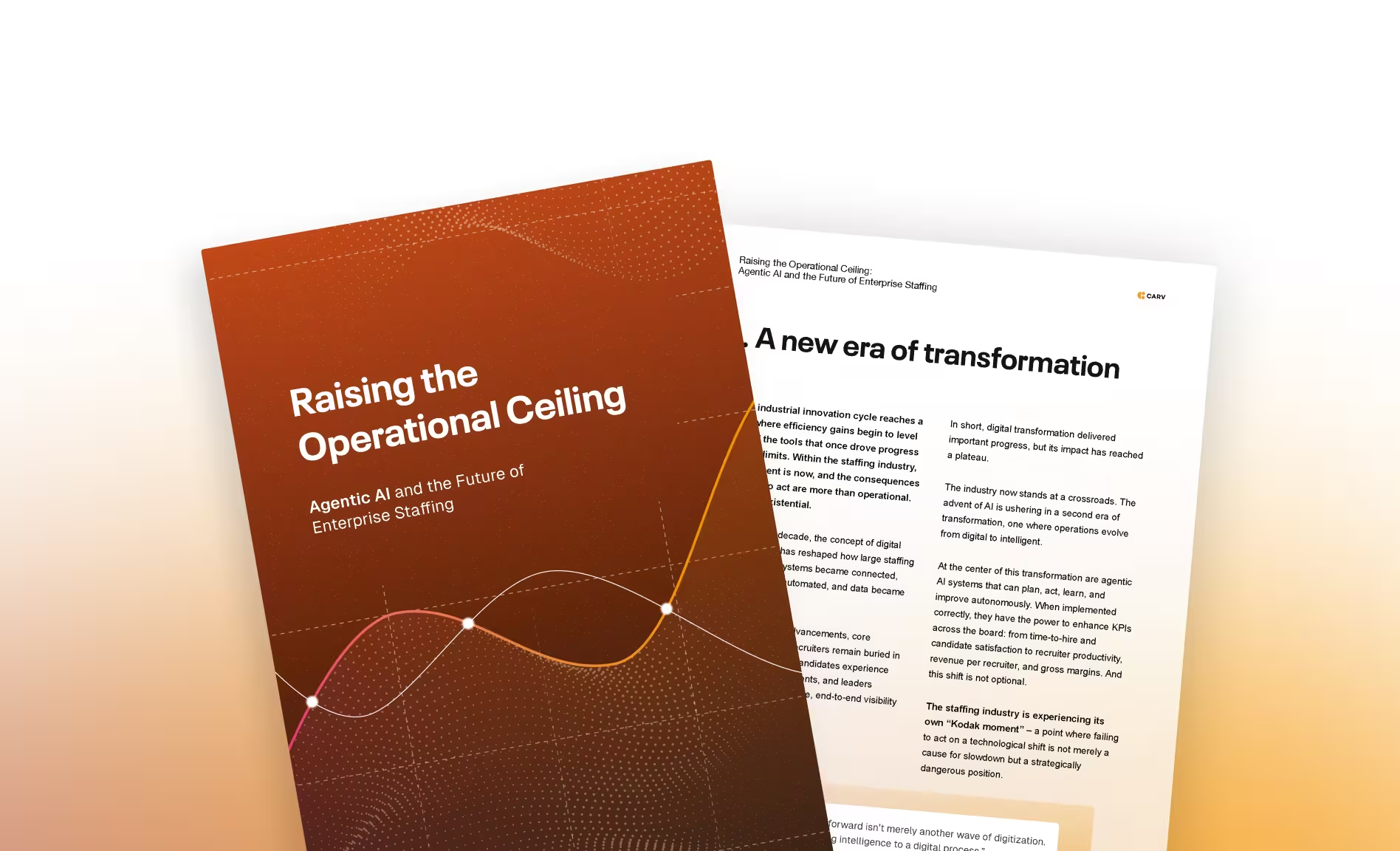
Raising the Operational Ceiling: Agentic AI and the Future of Enterprise Staffing
This whitepaper breaks down the shift from digital to intelligent staffing – revealing how agentic AI scales enterprise operations, elevates recruiters, and improves the candidate experience.
Webinar
●
March 27, 2026
From Hiring Velocity to Business Outcomes: Agentic AI’s Impact at ManpowerGroup Talent Solutions
We'll explore how ManpowerGroup Talent Solutions reshaped its operating model to embed AI across core hiring processes and the impact this transformation has delivered.

Webinar
●
January 15, 2026
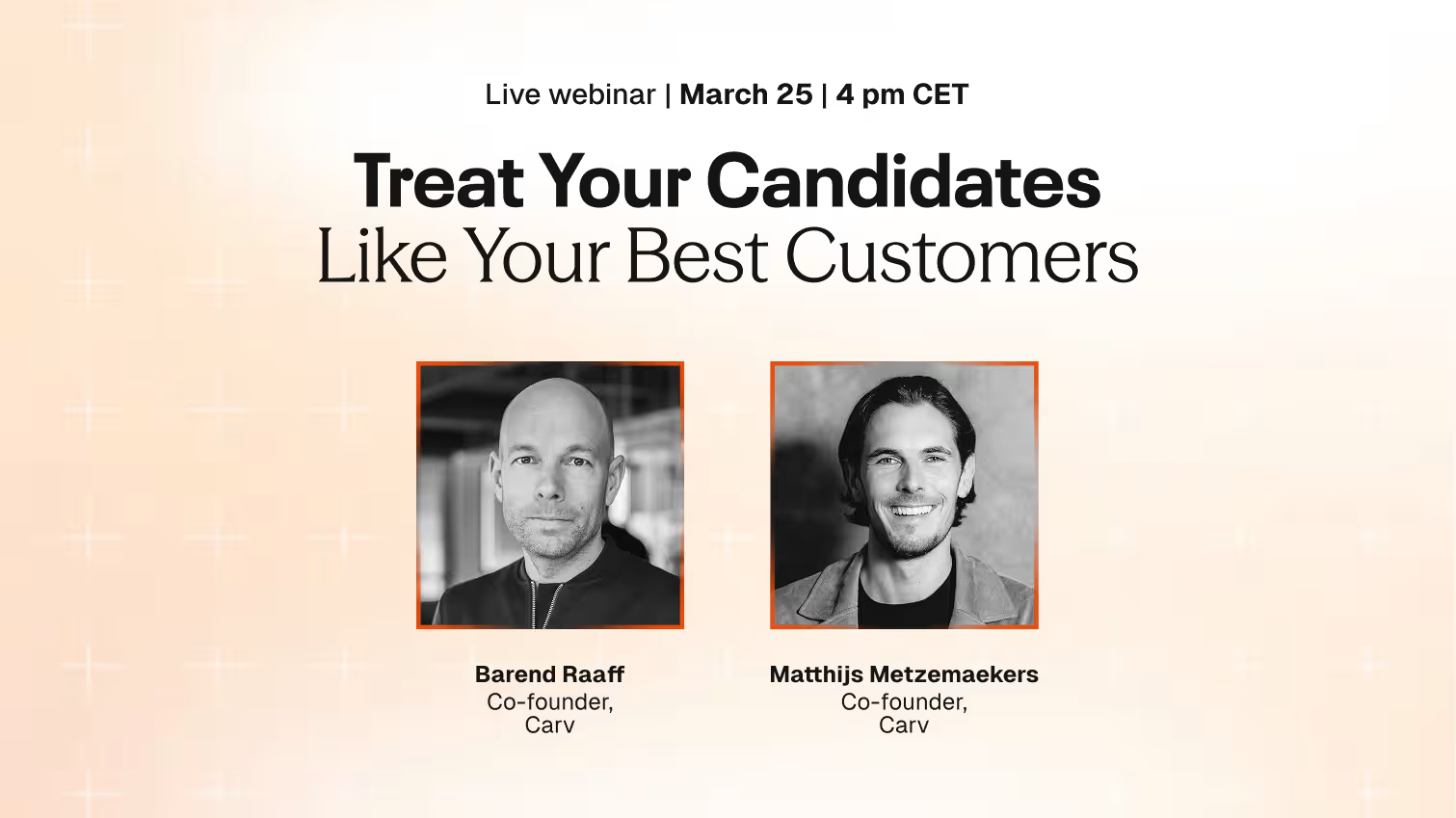
Treat Your Candidates Like Your Best Customers
For consumer goods brands, recruitment is a race against time. See how AI rewrites the playbook to deliver top frontline talent 24/7.
Webinar
●
January 15, 2026
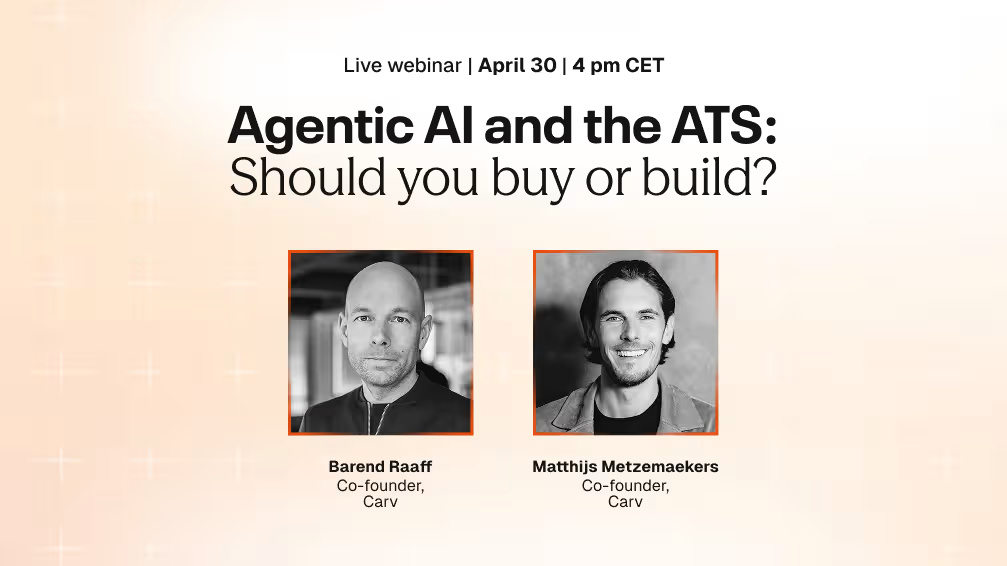
Agentic AI and the ATS: Should You Buy or Build?
Join us to explore the real costs, timelines, and integration hurdles ATS vendors face when bringing agentic AI into their tech stack.
Webinar
●
September 15, 2025
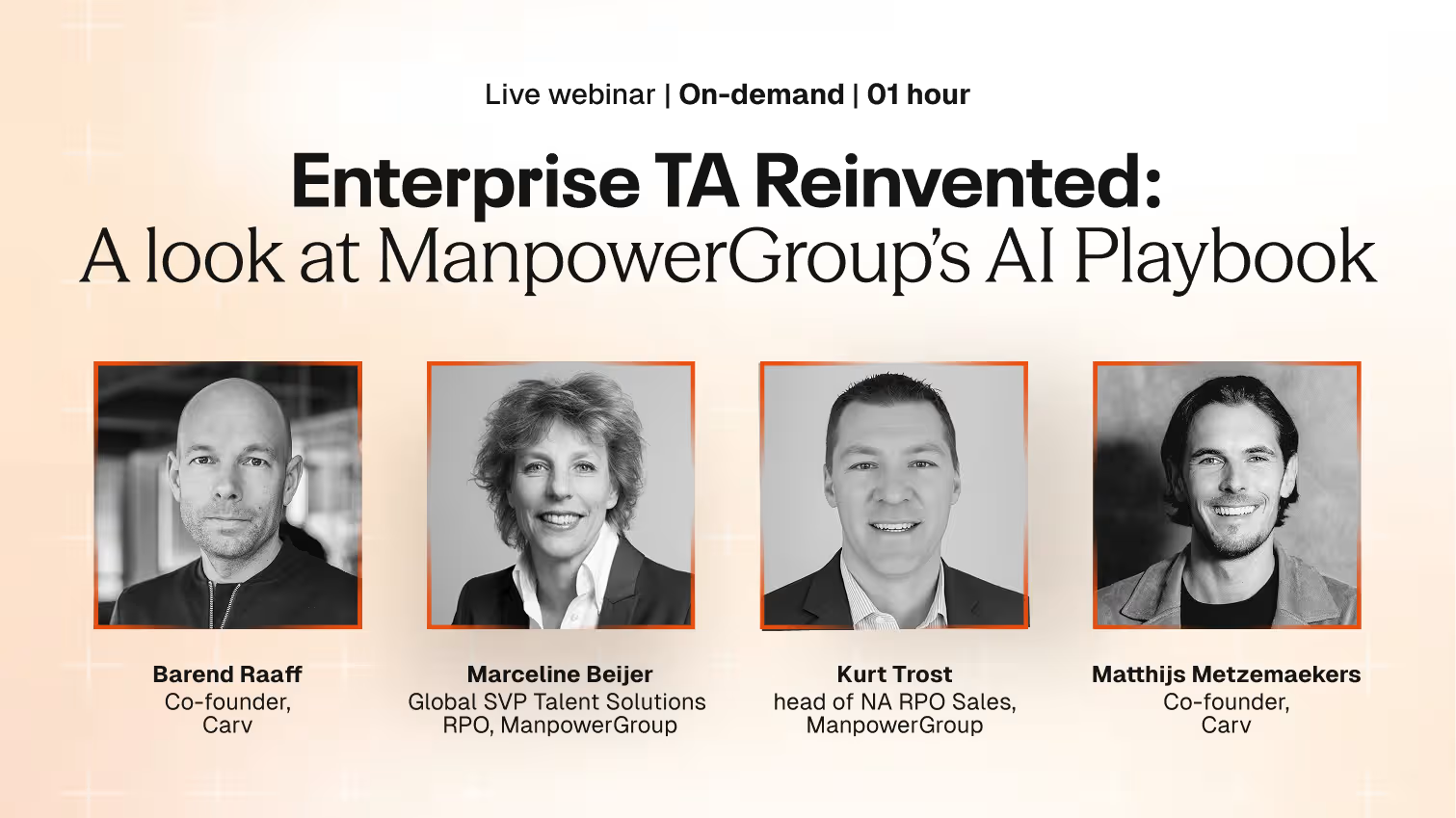
Enterprise TA Reinvented: A Look Inside ManpowerGroup’s AI Playbook
Gain a front-row view into how ManpowerGroup is implementing agentic AI to reshape enterprise talent operations.
Webinar
●
April 1, 2025
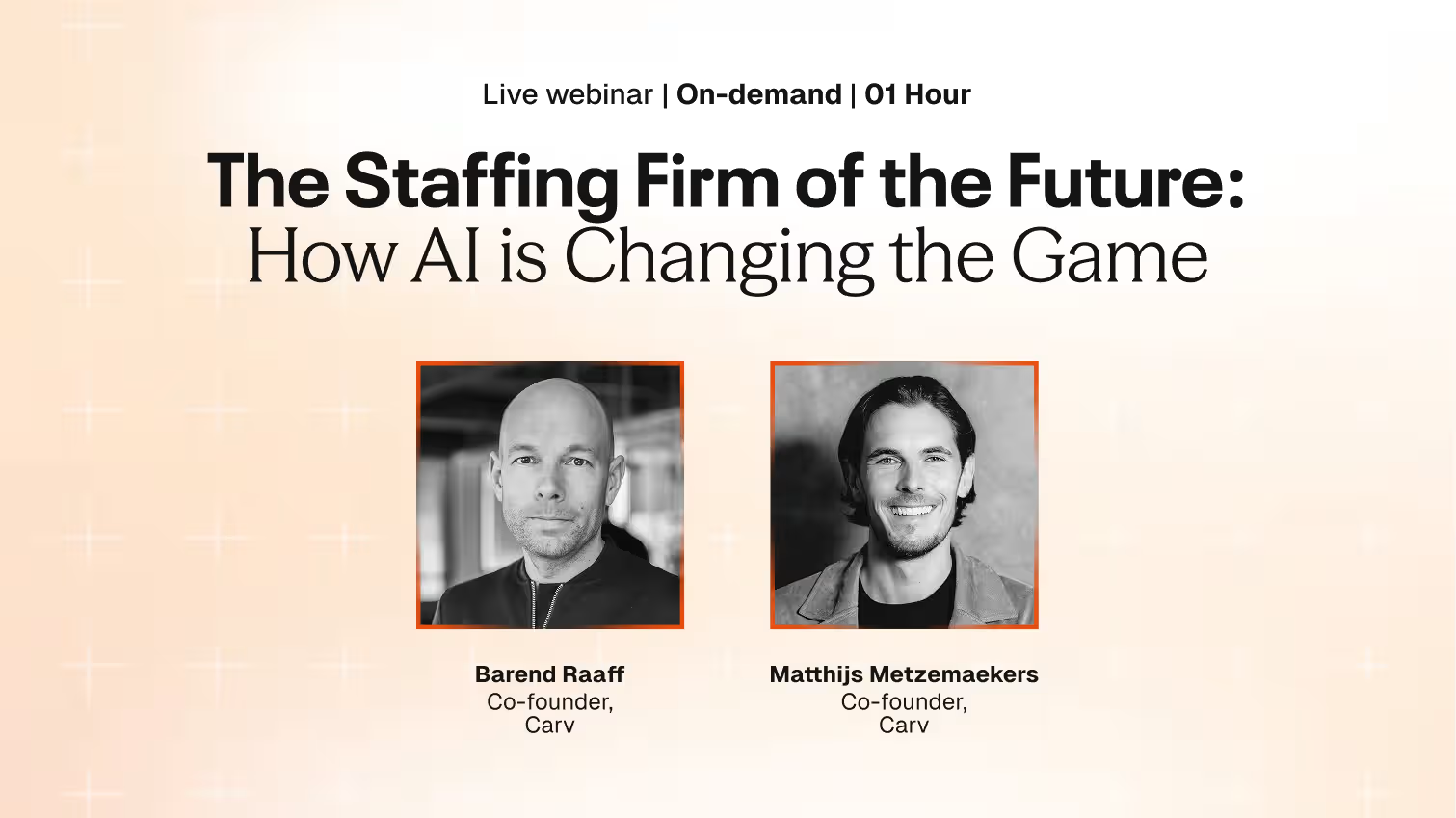
The Staffing Firm of the Future: How AI is Changing the Game
AI is transforming staffing. You know it, your competitors know it—but how do you actually put it to work? Join Carv’s Matthijs Metzemaekers and Barend Raaff as they break down practical AI adoption strategies for staffing firms.

Podcast
●
September 10, 2024
Breaking Down: The path to AI-Powered, Zero-Admin Recruitment
In this episode, we break down top questions on Zero-Admin Recruitment

Podcast
●
August 13, 2024
Breaking Down: Where does AI have the biggest impact in Recruitment?
In this episode we break down where AI has the biggest impact in recruitment

Podcast
●
June 20, 2024
Breaking Down: The role of the Recruiter in the Age of Artificial Intelligence
In this episode we break down the role of the recruiter in the age of artificial intelligence

Blog
●
August 19, 2026
How to Structure a Phased Deployment for an Agentic Recruitment Solution
%20(1).avif)
How to phase an agentic recruitment deployment: Sequence by leverage, validate before scaling, and keep the operating model moving with the rollout.
.avif)
Blog
●
July 29, 2026
From Run Book to Mission Book: Why Outcome-Led AI Agents are the Future of Recruitment
.avif)
Most recruiting organizations are investing in AI and still not seeing it move the outcomes that matter. Closing that gap takes three things at once, not one: a platform capable of owning a mission instead of isolated tasks, a team that knows how to work that way, and a partner who stays through the change to get you there.

Blog
●
July 17, 2026
To Succeed with AI, Recruitment Needs a New Operating Model
Most TA organizations adopt AI expecting it to transform the way they work. It won't, unless the underlying operating model changes with tech adoption.

Blog
●
July 13, 2026
What AI Transformation Actually Means in Recruitment (It's Not AI-Enablement)
AI-enablement and AI-transformation get used as if they're the same thing, separated only by ambition. They aren't. They produce different outcomes, require different levels of commitment, and one of them is far more common than the other.
.avif)
Blog
●
July 9, 2026
The Agentic AI Setup for Always-On Manufacturing Hiring
.avif)
The disconnect between how manufacturing operates and how manufacturing hiring operates is significant. And for many organizations, it’s becoming more pronounced every year.

Blog
●
June 16, 2026
AI Candidate Screening: How It Works, Tools & Best Practices for Modern Hiring
.avif)
Learn how AI candidate screening works, the different screening technologies available, their benefits and risks, and why agentic AI is becoming the future of high-volume recruitment.
ROI / margins

Blog
●
August 29, 2025
Cut Staffing Agency Costs with AI: A Practical Guide

Discover how staffing agencies can cut costs without sacrificing quality by using AI to streamline tools, automate admin, and maximize recruiter impact – all to scale smarter, not just bigger.

Blog
●
April 11, 2024
Building the ROI Case for AI in Recruitment
What ROI can you get if you implement AI in recruitment? This cost breakdown shows the potential cost savings and efficiency gains.
Productivity

Podcast
●
June 11, 2024
Breaking Down: Recruitment Productivity in the Age of Artificial Intelligence
In this episode we break down recruitment productivity in the age of AI

Podcast
●
March 12, 2024
Breaking Down: The Impact of AI on Recruiters' Productivity
In this episode, we break down the way AI will impact recruiters' productivity.
.jpg)
Blog
●
August 10, 2026
How to Reduce Retail Time-to-Hire From Weeks to Hours
Retail time-to-hire stays stuck at weeks despite better tools. Learn how agentic AI removes the waiting that's actually causing the delay.
Blog
●
June 16, 2026
AI Candidate Screening: How It Works, Tools & Best Practices for Modern Hiring
Learn how AI candidate screening works, the different screening technologies available, their benefits and risks, and why agentic AI is becoming the future of high-volume recruitment.
.avif)
Blog
●
March 20, 2025
How to Use an AI Chatbot to Shorten Your Candidate Screening Time
AI chatbots have the potential to truly change the candidate screening process, cutting the admin time and speeding up the entire hiring process.
%20(1).avif)
Blog
●
October 23, 2024
How to Increase Recruiter Productivity With AI
%20(1).avif)
AI can help increase recruiter productivity by taking over admin tasks. Here's what this looks like in practice.

Blog
●
July 21, 2026
How to Reduce Time-to-Hire With Agentic AI: A Practical Approach
Time-to-hire is at an all-time high. Here's how to reduce time-to-hire with AI, using Carv's agentic platform as a practical example.
.avif)
Blog
●
July 1, 2024
Candidate Pre-Screening: Save Time and Improve Efficiency with AI
.avif)
Pre-screening can be time-consuming if not handled accurately, allowing good candidates to slip through the cracks. AI can support this process, increasing both efficiency and accuracy.

Blog
●
June 3, 2024
Reduce Your Staffing Agency’s Workload Using AI: How to Get Started
If your recruiters are being stretched too thin, you can decrease their workload and increase efficiency with the help of AI.

Blog
●
May 24, 2024
AI’s Role in Balancing Speed With Quality of Hire in Agency Recruitment
For agency recruiters, putting speed over quality can mean lost clients and damaged reputation. But prioritizing quality hires can slow them down. AI can help solve this challenge.
.avif)
Blog
●
April 3, 2024
Improving Staffing Efficiency: Where AI Can Help and How to Get Started
The staffing industry thrives on efficiency and speed, but recruiters spend most of their time on admin. Here's how AI can help improve staffing efficiency.
Candidate experience
.avif)
Blog
●
August 4, 2026
From Application to First Shift: What AI Handles in BPO Hiring
End-to-end agentic recruitment can sound scary when you don't understand what the candidate actually sees as they go through the hiring process. Let's walk through each step of the candidate journey to see how it actually works.

Blog
●
September 23, 2025
How AI Transforms Candidate Engagement for Recruiters
Candidate engagement often breaks down with slow follow-ups and generic outreach. This guide shows how AI can transform every touchpoint – from pre-screening to interview prep to talent pool rediscovery – so recruiters build stronger connections without drowning in admin.

Blog
●
August 9, 2024
Candidate Engagement Strategies: What Works in 2024?
What worked in the past isn't working before. Candidates expect a short hiring process and fast response times. How can companies adapt and keep candidates engaged?
%20(1)%20(1)%20(1)%20(1)%20(1)%20(1).avif)
Blog
●
March 15, 2024
Frictionless Candidate Journey: How AI and Recruiters Can Co-Create a Better Experience
In automation-driven recruitment, the candidate journey is filled with bottlenecks that lead to a dry and sterile process. By teaming up with AI, recruiters can fix the process, making it human again.
Implementation
Guide
●
March 28, 2024
Implementing AI in Recruitment: A Framework to Get You Started
If you want to adopt AI in your recruitment process but you're not sure where to start, this framework will provide you with a structured approach for a staged roll-out.


Podcast
●
June 4, 2024
Breaking Down: Implementing AI - in small vs. big companies
In this episode, we break down implementing AI in small vs. big companies.

Podcast
●
May 27, 2024
Breaking Down: How AI can make your ATS work the way it should
In this episode we break down how to fully utilize an existing ATS with AI
Blog
●
August 19, 2026
How to Structure a Phased Deployment for an Agentic Recruitment Solution
How to phase an agentic recruitment deployment: Sequence by leverage, validate before scaling, and keep the operating model moving with the rollout.

Blog
●
August 11, 2026
Why Recruitment AI Point Solutions Stop Working at Enterprise Scale
How AI point solutions fail at enterprise recruiting scale — and why end-to-end platforms solve the context and coordination problems that stacked tools can't.

Blog
●
June 9, 2026
Agentic AI for Mid-Market Staffing Agencies: A Practical Guide
If you're leading recruitment, operations, or growth at a staffing firm with somewhere between 50 and 200 people, you're facing the same pressures as the enterprise firms - candidate scarcity, margin compression, rising recruiter costs, clients demanding more for less – but with fewer resources to respond.
Blog
●
August 20, 2025
How AI Talent Pooling Works
.avif)
Unlock a strategic competitive advantage by transforming your static ATS into a dynamic, AI-powered talent pipeline that finds and engages the perfect candidate for every role.

Blog
●
July 21, 2025
Where to Start with AI: Sourcing, Screening, or Scheduling?
Start with what makes your team faster without requiring a new workflow: admin automation and AI screening. These tools clean your pipeline, generate structured data, and remove the low-value work that clogs up your day.

Blog
●
August 13, 2026
Why AI Fails in Staffing Firms – and How to Avoid It
Most AI rollouts in staffing fail for the same few reasons. Here's what separates firms getting real ROI from those left frustrated with the tech.
Blog
●
March 28, 2024
Implementing AI in Recruitment: A Framework to Get You Started
If you want to adopt AI in your recruitment process but you're not sure where to start, this framework will provide you with a structured approach for a staged roll-out.

Blog
●
August 18, 2026
AI-Based Recruitment Automation: What it Looks Like Today
AI-based recruitment automation now handles what legacy ATS tools never could: unstructured work like interview notes, intake calls, and job requirements – not just step progression.

Blog
●
February 13, 2024
AI-Driven Recruitment: The Before and After States of the Hiring Process
Artificial intelligence has the potential to completely reimagine hiring, taking it from AI-assisted to AI-led. In AI-driven recruitment, the focus shifts away from the process steps to the outcomes and impact hiring drives for the business.
Security and compliance

Podcast
●
November 11, 2024
Breaking Down: The EU AI Act and its impact on recruitment
In this episode, we break down the EU AI Act and its impact on recruitment
%20(1).avif)
Blog
●
October 31, 2024
The EU AI Act and Its Impact on Recruitment: What Leaders Need to Know
With the EU AI Act, recruitment leaders must reassess their AI software providers to ensure they meet new compliance standards, transparency requirements, and risk management protocols.

Blog
●
August 22, 2024
Choosing AI Recruitment Agency Software: Criteria to Consider
Here's the most important criteria to consider when looking to buy AI-based recruitment software for your recruitment or staffing agency.
Impact of AI transformation


%20(1)%20(1)%20(1).avif)
Let's connect
Ready for zero-admin recruitment?
Team up with Carv
and eliminate admin
Carv is AI purpose-built to take over admin tasks related to intake calls & interviews.
Join the waitlist
And you’ll be first to know when Carv for recruiters is live!
