


As AI agents take over more of the hiring process, the recruitment operating model changes: how work flows, who makes each decision and how the team is structured around it.
A TA team still organized for the old model misses that shift. Recruiters repeat steps the agents already handle, and nobody owns the system that runs them.
In the new model, the team is structured around three TA roles, with the hiring manager on the business side:
- Lead recruiter: steers each requisition and owns the hiring manager relationship.
- Operational recruiter: steps in wherever a candidate needs a person.
- Talent engineer: builds and improves the system the agents run on.
- Hiring manager: defines what the role needs and makes the final hiring decision, from outside the TA team.
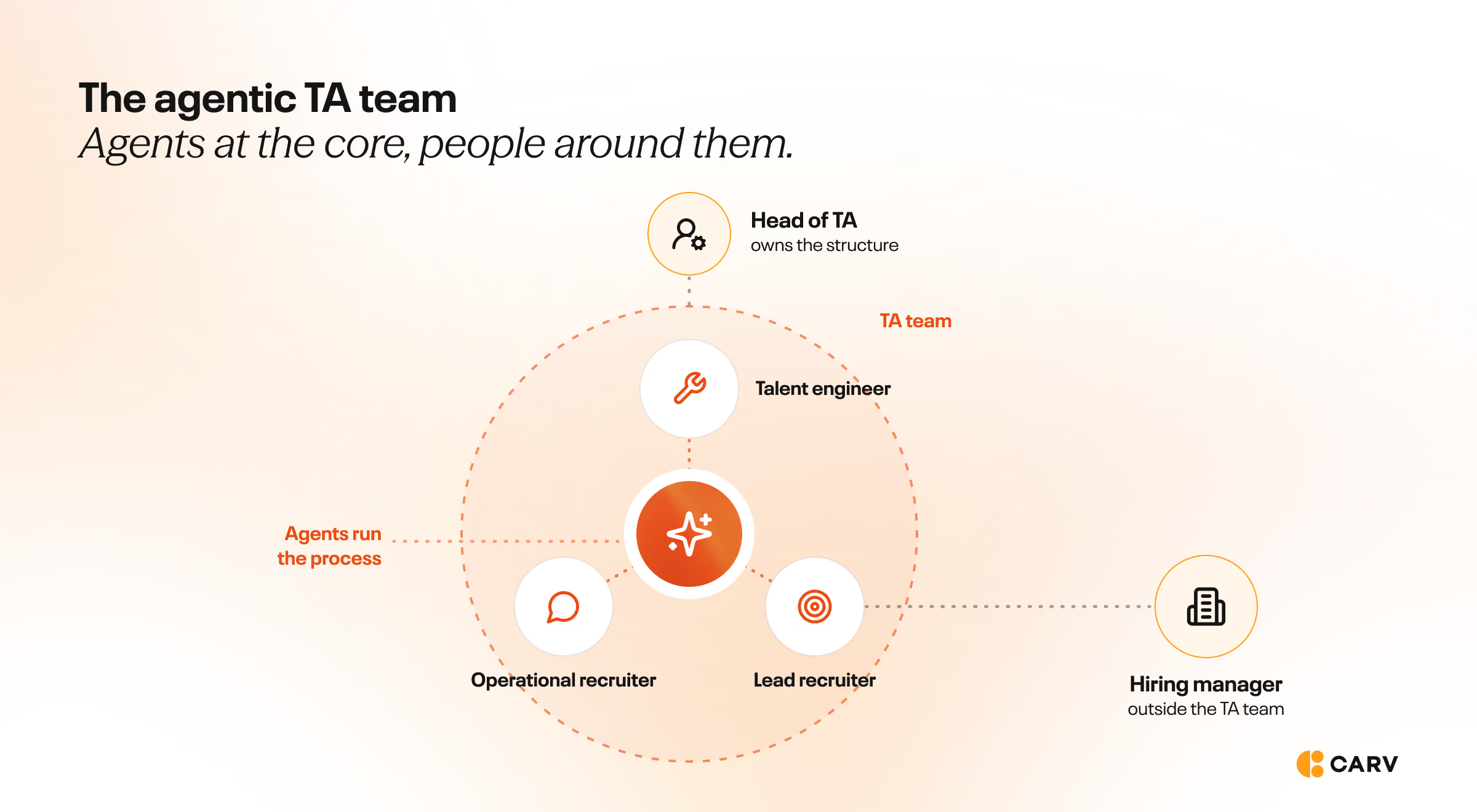
Let's take a closer look at each of these.
What changes when agents run the process
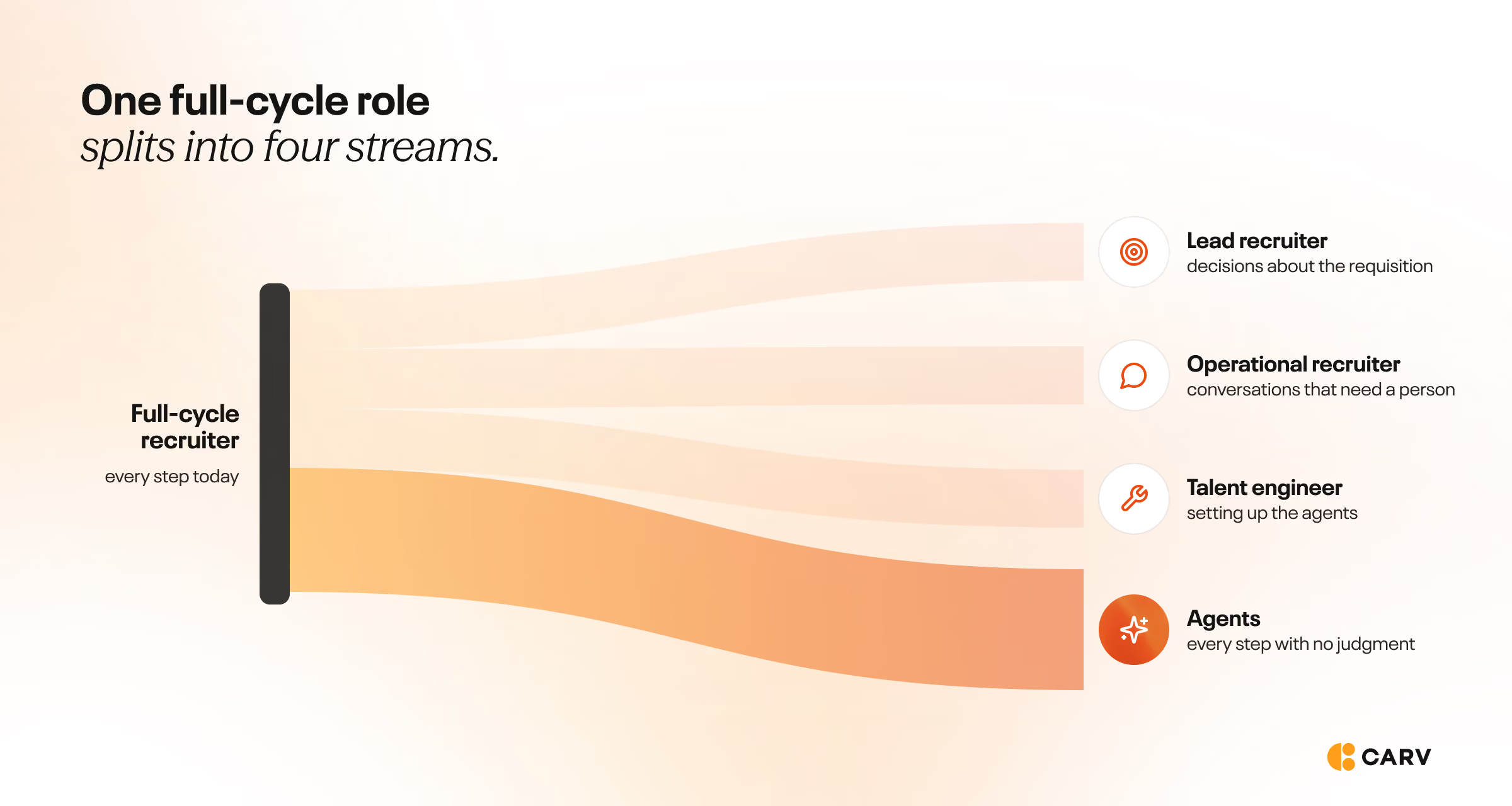
In a traditional team, a full-cycle recruiter runs every step of a requisition: intake, sourcing, screening, scheduling, interviews, the offer, and the ATS updates in between.
When agents take over the steps that need no judgment, that role splits apart. Three kinds of work are left: decisions about the requisition, conversations that need a person, and the setup of the agents themselves.
The three run on different clocks. Decisions happen at intake and at checkpoints. Candidate conversations happen live, often minutes after an agent hands over. System work happens between requisitions, and it needs a different skill set from either.
That is why each gets its own role. Team structure follows from who makes each decision, a point covered in the post on the recruitment operating model. Here is what each role owns, starting with the one closest to the business.
The lead recruiter: owns the requisition
The lead recruiter owns each requisition from intake to hire, along with the relationship with the hiring manager or client. They turn what the hiring manager needs into hiring criteria and judge whether a requisition is on track.
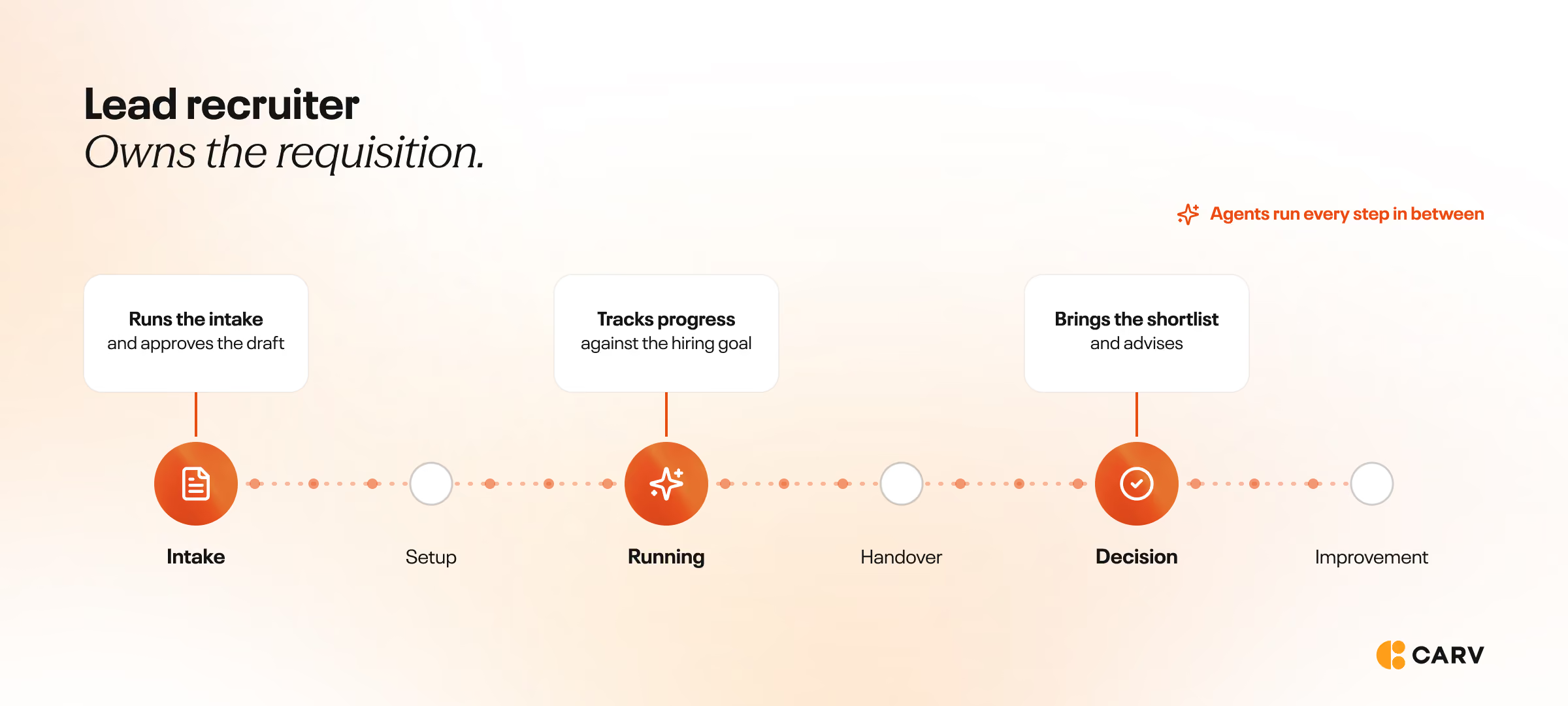
After intake, agents turn the meeting notes into a requisition draft, search the existing talent pool and start screening. The lead recruiter fills the gaps in the draft, approves it and then follows progress against the hiring goal.
They step in when a requisition drifts, when a hiring manager changes the brief, and when the shortlist goes to the hiring manager.
The role suits senior full-cycle recruiters and account managers, the people who already spend their best hours with hiring managers.
Once the lead recruiter has set a requisition up, the next person a candidate meets is the operational recruiter.
The operational recruiter: handles the human moments
The operational recruiter owns the conversations that need a person: interviews, candidates with questions an agent shouldn't answer, and the exceptions agents escalate.
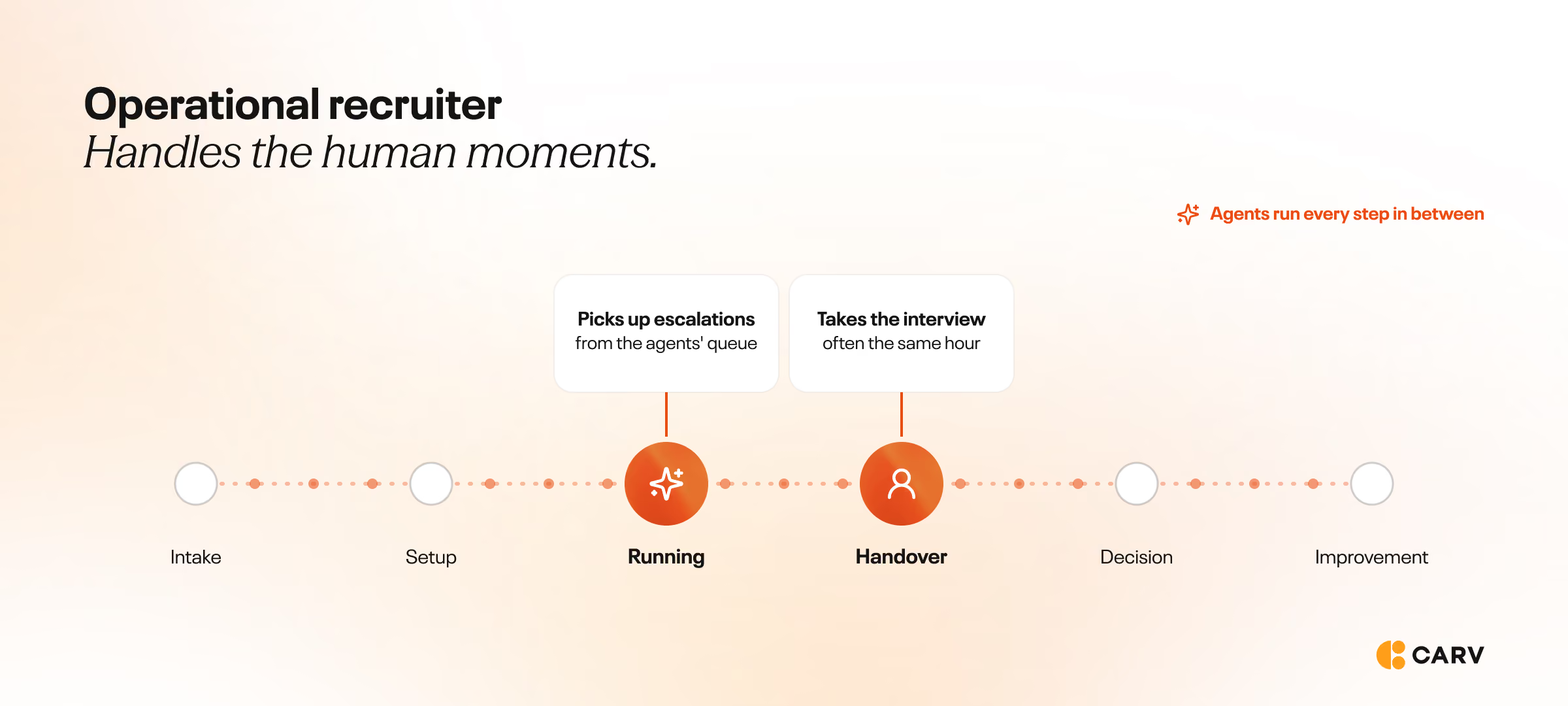
They work from a queue the agents fill. An interview is ready, a candidate left a conversation halfway, a flag needs review. Each item arrives with the full conversation history, and once the operational recruiter is done, the agents pick the process up again.
They step in fast. When a qualified candidate is ready and an operational recruiter is free, the interview can happen the same hour, while the scheduling agent books everyone else into open slots.
The role suits recruiters who are at their best with candidates, and coordinators whose scheduling and admin work has moved to agents. It keeps the human part of hiring with people who want to do it.
Both roles depend on agents that are set up correctly, and that setup is the talent engineer's job.
The talent engineer: builds the system
The talent engineer owns how agents and people work together: which agents run on each flow, their instructions and permissions, and the rules for when a person takes over.
They configure and test each new flow before it goes live. Once it runs, they read what the agents did through the action log and adjust the flow when a step stalls or candidates drop out.
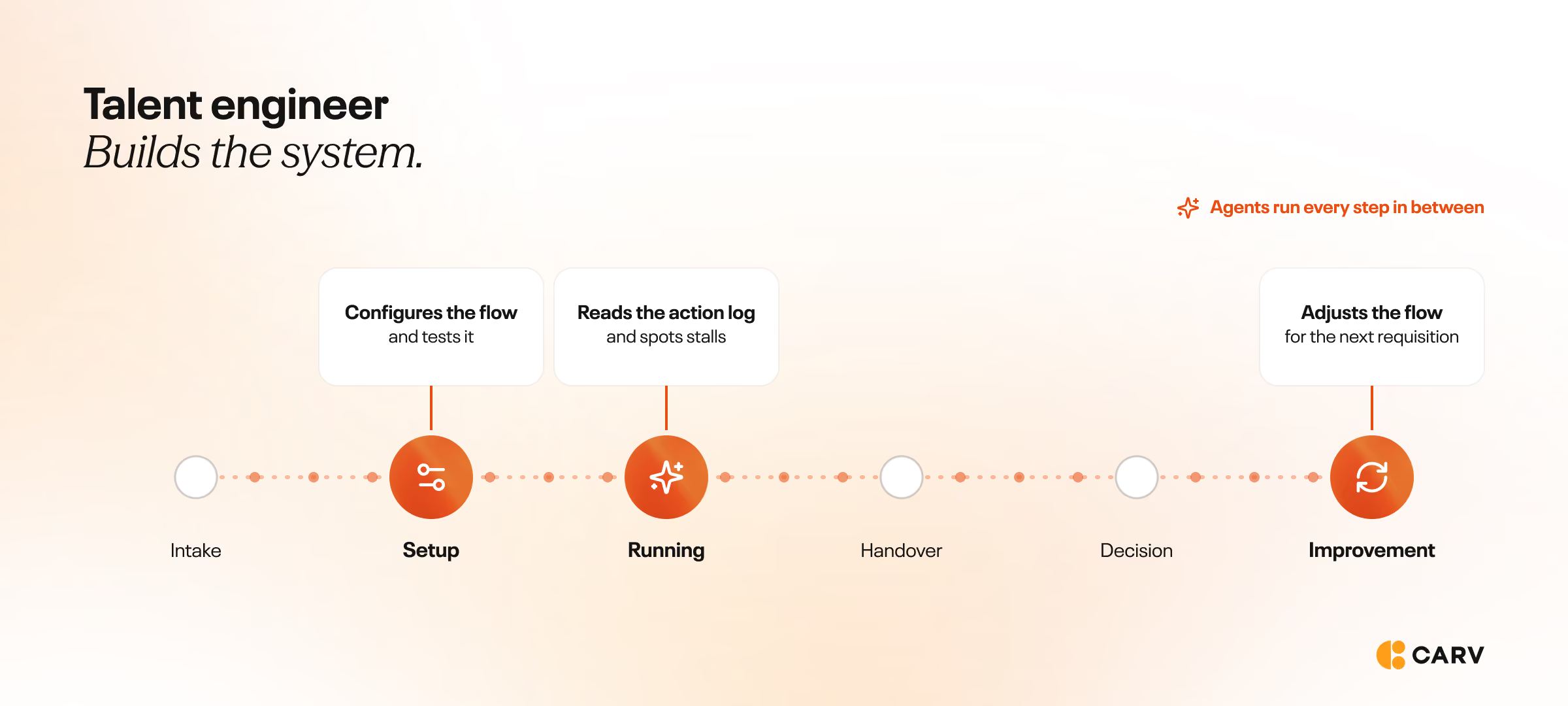
They step in when a new location, client or role type opens, when regulations change, and when recruiters keep escalating the same exception.
The role suits people from TA operations, recruitment marketing, and recruiters who were already the ones fixing the ATS for everyone else.
The three roles work inside a structure someone has to design, and that falls to the head of TA.
Where the head of TA sits
The head of TA owns the structure itself. Their main job is deciding which decisions agents take and which stay with people, and writing that down before the first flow goes live.
They also set the goals lead recruiters work toward. In a mission-led setup, the system is handed outcomes to deliver, and the head of TA decides what those outcomes are.
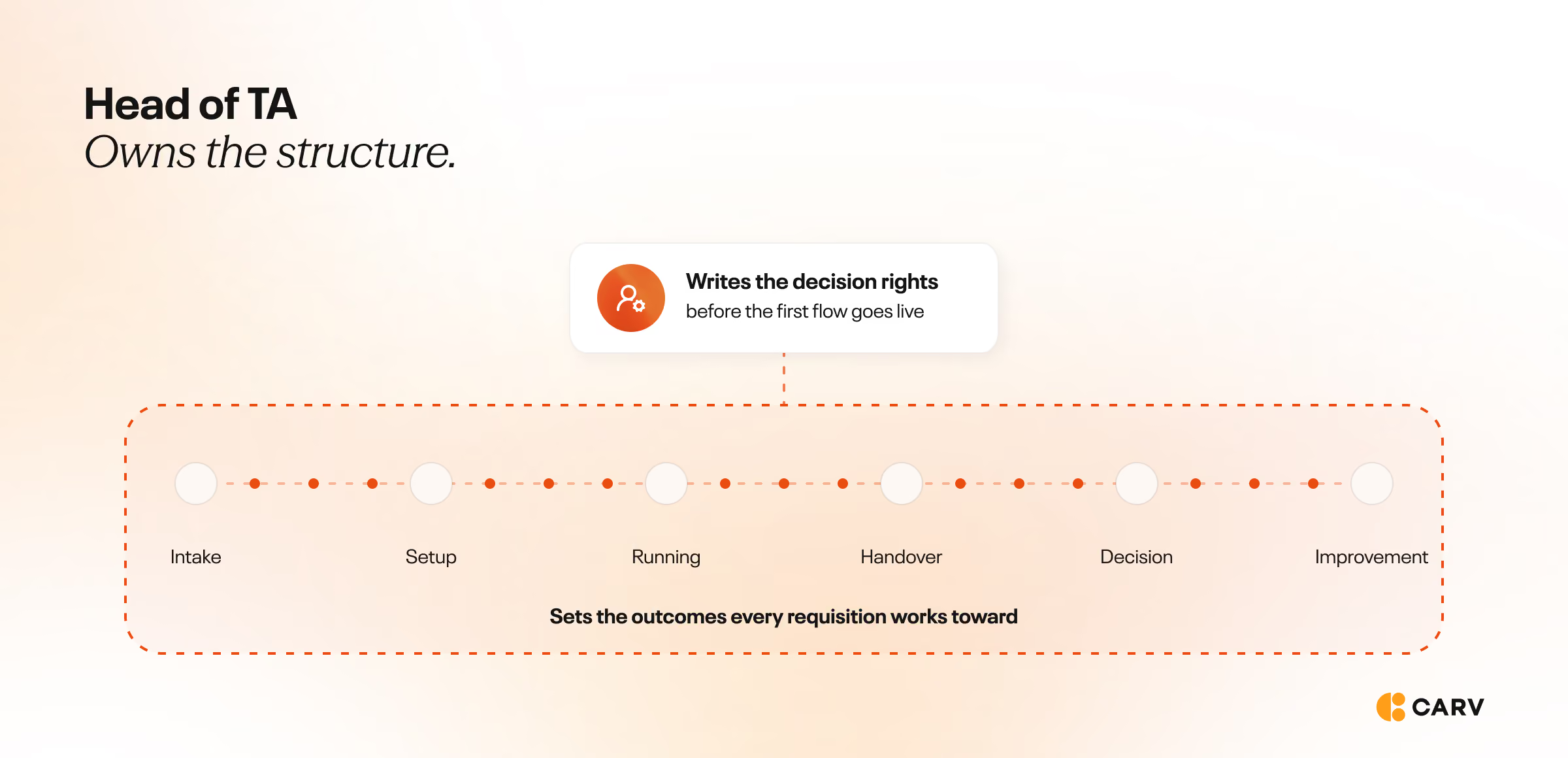
The head of TA shapes everything inside the team. The hiring manager sits outside it, and their part in the process changes as well.
Where the hiring manager fits
The hiring manager sits outside the TA team and owns the need: what the role is for, what a good hire looks like, and the final decision.
They deal with agents less than anyone else here. Their touchpoints are the intake, the interview slots the scheduling agent books into their calendar, and the shortlist the lead recruiter brings them.
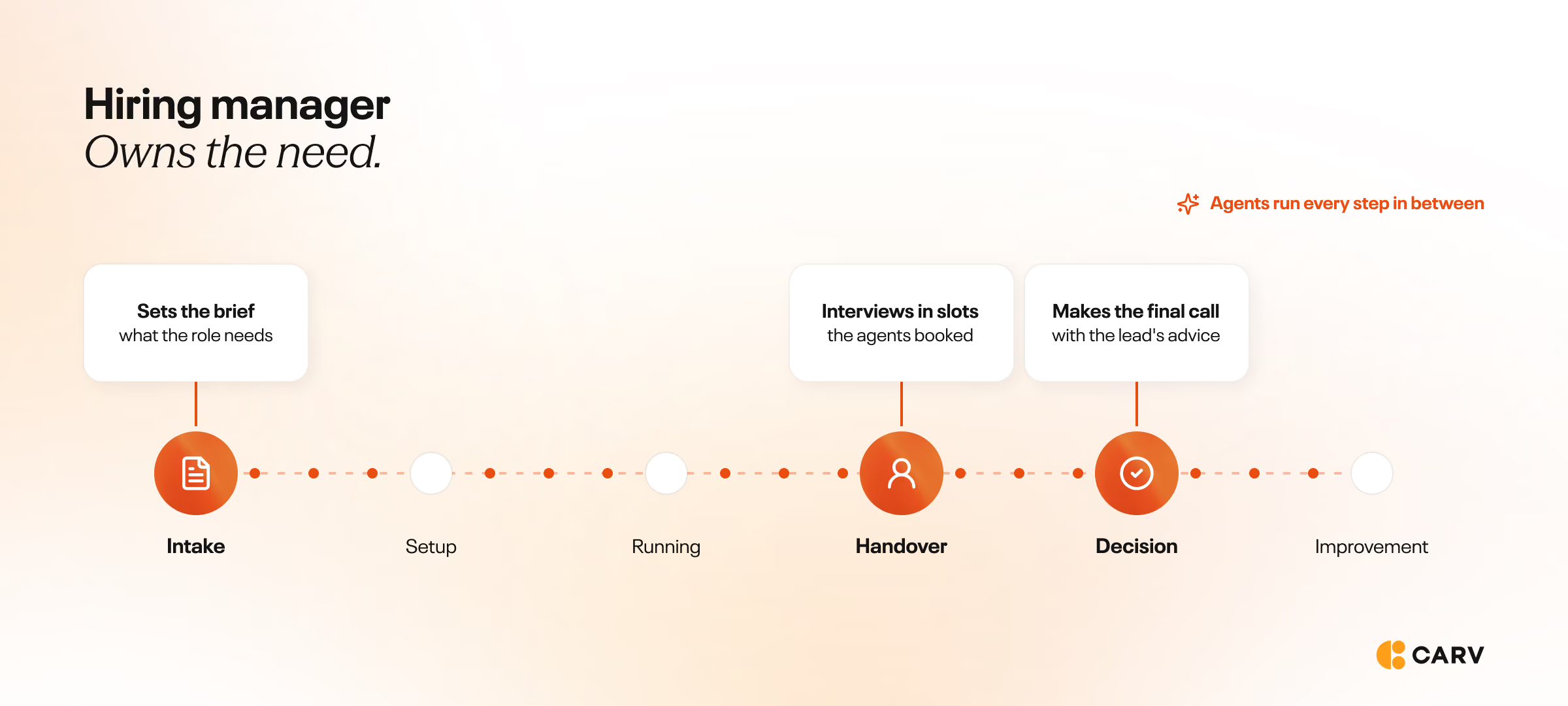
They step in at the start, when the brief is set, and at the end, when the decision is made. Everything in between runs without them unless the lead recruiter brings them back in.
In the new structure, their one contact in TA is the lead recruiter.
With every role defined, the clearest way to see how they fit together is to follow one requisition through the process.
How the roles connect on one requisition
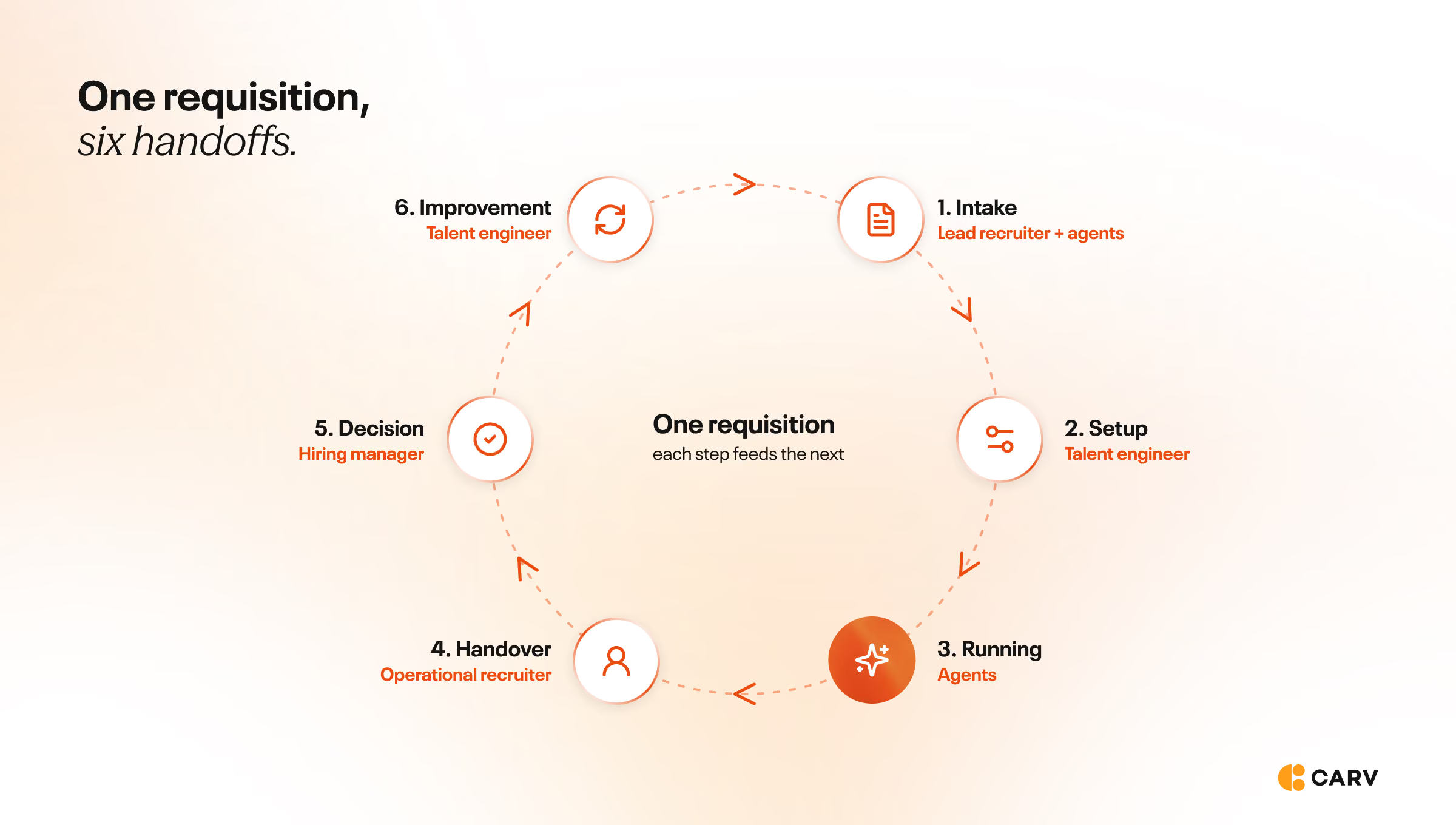
Following one requisition shows where each role touches the work:
- Intake: the lead recruiter meets the hiring manager. Agents turn the notes into a requisition draft, and the lead recruiter completes it.
- Setup: the talent engineer checks the flow, including the assessment, any language test and the handover points, and approves it.
- Running: the host agent engages applicants, the screening agent qualifies them and the scoring agent ranks them against the role.
- Handover: when a candidate is ready for a person, an operational recruiter takes the interview.
- Decision: the hiring manager makes the call, with the lead recruiter's advice. Agents handle the offer admin and the ATS updates.
- Improvement: the talent engineer reviews where candidates dropped out and adjusts the flow for the next requisition.
Each role touches the requisition at a different point. None of them do the steps in between.
Few teams start from a blank page, so the next question is how to get there from the team you have today.
Moving your current team into the new structure
The change works best in stages, in step with the phased deployment of the agents:
- Map the work first: list every task your recruiters do today and mark which moves to agents, which stays with people, and which role takes it. The structure follows from that list.
- Start with one team: pick one team or region, move it to the new roles, and widen once the handovers work.
- Let people choose their lane: recruiters who prefer hiring managers move toward lead roles, those who prefer candidates toward operational roles, and the systems-minded toward talent engineering.
- Change the measures with the roles: lead recruiters are measured on requisition outcomes, operational recruiters on candidate experience and time to interview, and talent engineers on how well the flows perform.
The shift to an AI-transformed operating model stalls when the roles stay the same, so the structure has to move with each phase.
Over to you
In an agentic operating model, the TA team is organized around three roles: steering requisitions, handling the human moments and running the system. The head of TA owns which decisions sit where, and the hiring manager keeps the final call.
Request a demo and we'll map the new structure for your team with you.